There are few riding challenges that combine altitude, weather, terrain and isolation quite like the roads of Ladakh. At these elevations, a journey is no longer just about the distance on the map. The air is thinner, temperatures can fall sharply, gradients can be demanding, and assistance may be hours away.
It is also why the World’s Highest Motorable Road attracts such interest from adventure riders, motorcycle enthusiasts and travellers. Reaching these roads is a test of preparation as much as riding ability.
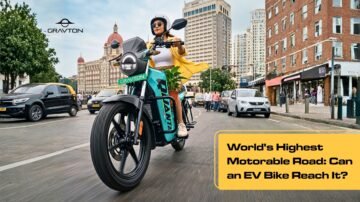
But what happens when the vehicle making the climb is electric?
Can an electric bike handle the steep gradients, low temperatures and reduced oxygen levels of the Himalayas? Does its battery perform differently at altitude? And what does it take to plan an electric two-wheeler expedition in a region where charging infrastructure can be limited?
These are important questions as electric mobility moves beyond familiar city commutes and into more demanding riding environments.
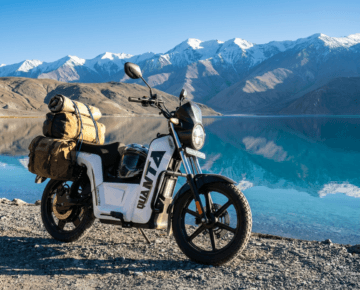
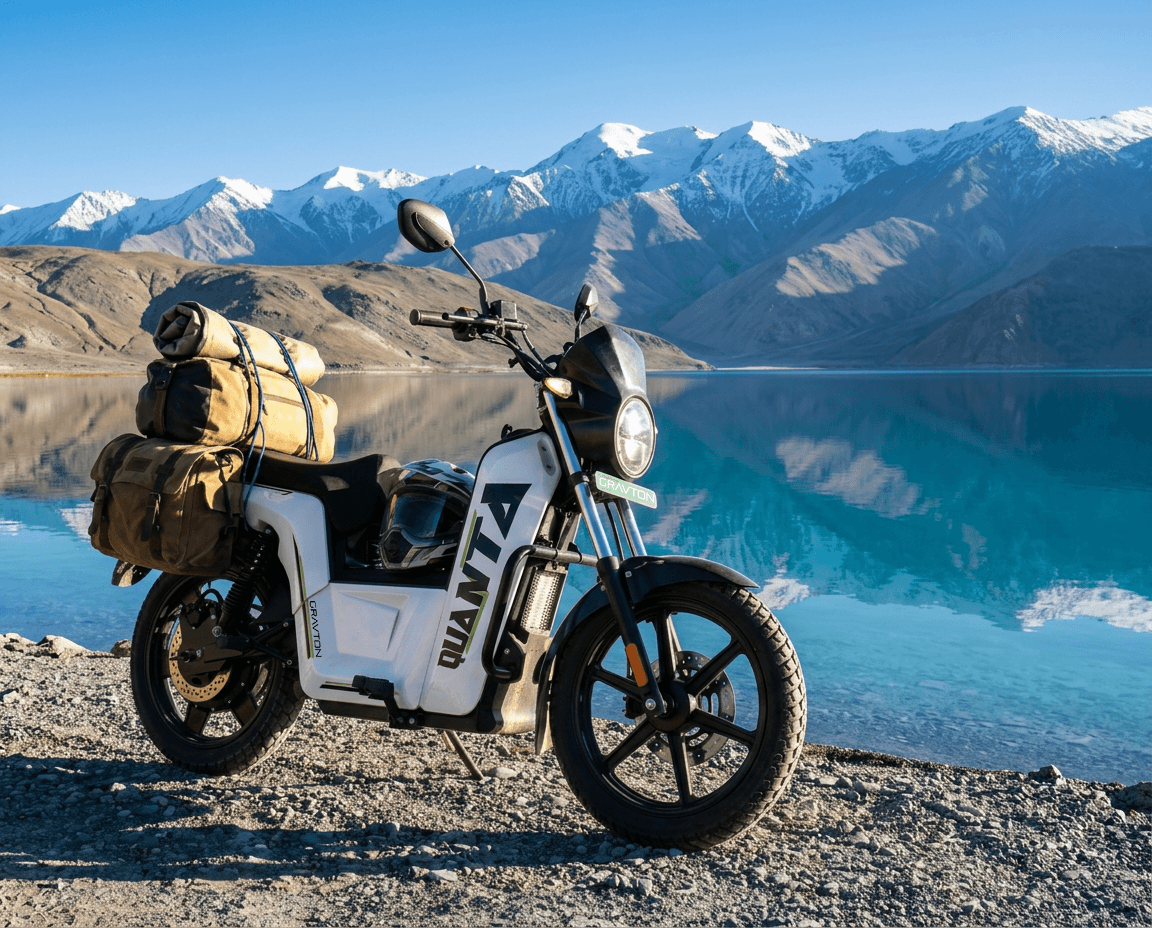
Gravton Motors has explored a related challenge through its Quanta electric two-wheeler. In September 2021, the company undertook a Kanyakumari to Khardung La expedition covering 4,011.9 km in 164 hours and 30 minutes, or approximately 6.5 days. The achievement was subsequently recognised by the Asia Book of Records.
The expedition did not travel to Umling La or Mig La, the passes associated with the World’s Highest Motorable Road designation. However, the journey to Khardung La provides a relevant Indian electric mobility case study because its final high-altitude section shares several of the environmental and engineering challenges encountered on other roads in Ladakh.
Understanding that distinction helps answer a more useful question: how capable can an electric bike be when the road becomes genuinely demanding?
1. Where Is the World’s Highest Motorable Road?
The World’s Highest Motorable Road is in Ladakh, in the Indian Himalayas. The designation has become associated with roads constructed by the Border Roads Organisation (BRO) across remote, high-altitude terrain.
For years, Umling La Pass was widely recognised as the world’s highest motorable road. According to India’s Ministry of Defence, the road crosses Umling La at 19,024 feet above sea level and connects the Chisumle and Demchok areas of eastern Ladakh.
In October 2025, reports described Mig La, at a reported elevation of 19,400 feet, as the new highest motorable road. The route forms part of the Likaru to Mig La to Fukche alignment in eastern Ladakh.
The distinction matters because the highest-road designation depends on the road being discussed, its elevation and the record authority being referenced.
| Location | Reported elevation | Significance |
|---|---|---|
| Umling La Pass | 19,024 ft | Road officially recognised by Guinness World Records in 2021 as the highest altitude road |
| Mig La Pass | 19,400 ft | Reported in 2025 as the new highest motorable road, surpassing Umling La |
Sources: Ministry of Defence, Government of India; Guinness World Records; reporting on Mig La in October 2025.
For riders, however, the appeal extends beyond the record itself. These roads traverse remote terrain where low temperatures, limited oxygen, steep gradients and changing weather can make even a short journey demanding.
Anyone planning to ride in the region must verify the latest access restrictions, road conditions, permits and local advisories. The fact that a road is motorable does not mean it is accessible to every vehicle or open throughout the year.
2. Why Is Riding to the World’s Highest Motorable Road So Difficult?
At extreme altitude, several challenges come together. A vehicle that performs well on a flat city road must cope with a different set of operating conditions when climbing into the Himalayas.
Thin air and reduced oxygen
At high altitude, atmospheric pressure falls and the amount of oxygen available with each breath decreases. This affects the rider’s physical endurance and ability to respond to demanding conditions.
Electric motors do not depend on oxygen for combustion in the way petrol engines do. This removes one specific altitude-related challenge associated with internal combustion engines.
However, that does not mean an electric bike is unaffected by altitude. Its battery, motor controller, thermal management, tyres and other components must still operate within their specified environmental limits. The rider must also manage the effects of altitude on the human body.
Steep gradients
Climbing a mountain road requires energy to raise the combined mass of the rider and vehicle against gravity. The steeper the gradient and the greater the total weight, the more demanding the climb becomes.
This makes torque delivery, gearing or drivetrain characteristics, thermal management and available battery energy relevant to a vehicle’s climbing capability.
For electric two-wheelers, motor torque can be useful when moving off or maintaining progress on inclines. However, torque figures alone do not establish whether a vehicle can complete a particular climb. Gradient, speed, load, traction, battery condition and sustained power capability all matter.
Cold temperatures
Low temperatures can affect battery performance. Depending on the battery chemistry and its temperature management system, cold conditions can temporarily reduce the energy available for use and limit charging performance.
A battery that performs adequately in moderate weather may behave differently after prolonged exposure to freezing conditions.
Riders planning high-altitude expeditions should understand the vehicle manufacturer’s temperature limits and battery protection systems rather than assume that normal operating range and charging behaviour will remain unchanged.
Remote terrain and limited charging access
Charging availability is one of the biggest practical considerations for electric travel in remote regions.
A route may include long stretches without a suitable charging point. Even if the vehicle has sufficient range for the distance under favourable conditions, gradients, cold weather and additional load may increase energy consumption.
An expedition therefore needs more than a capable vehicle. It needs a realistic route plan, a charging strategy, contingency arrangements and reliable communication.
These factors make the World’s Highest Motorable Road a demanding destination for any two-wheeler, irrespective of its powertrain.
From a Dream to a Defining Journey: Gravton Quanta’s K2K Record
3. Can an Electric Bike Reach the World’s Highest Motorable Road?
In principle, an electric bike can operate at high altitude if its design, battery, motor, thermal management and operating conditions are suitable for the journey.
But a responsible answer cannot be based on battery capacity or motor torque alone. Whether a particular electric bike can reach the World’s Highest Motorable Road depends on its engineering, tested operating limits, available energy, road access and expedition preparation.
There are four key considerations.
Battery performance: The battery must deliver usable energy under the temperatures and loads encountered on the route. Riders should understand how cold conditions affect range and whether the vehicle has any temperature-related operating restrictions.
Climbing capability: The motor and controller must support the required load and gradients without exceeding their operating limits. Published torque and gradability figures can help assess suitability, but they are not a substitute for validated performance under the relevant conditions.
Thermal management: Sustained climbing can place demands on the motor, controller and battery. A vehicle’s ability to manage heat during prolonged operation is an important engineering consideration.
Energy planning: Riders need to account for distance, elevation changes, weather, charging access and contingency reserves. A route that appears manageable on a map may become impractical if energy consumption is higher than expected or charging arrangements fail.
The important distinction is between technical possibility and a demonstrated achievement. An electric bike may be capable of operating at high altitude, but claiming that a particular model has conquered the World’s Highest Motorable Road requires evidence that the vehicle actually completed that specific route.
This is where real-world expeditions provide useful context.
Autocar India: Gravton Quanta e-bike completes Kanyakumari to Khardung La in record time
4. What Gravton Quanta’s Kanyakumari to Khardung La Record Demonstrates
Gravton Motors undertook its Kanyakumari to Khardung La expedition to demonstrate the endurance and long-distance potential of an Indian electric two-wheeler.
The journey began at Kanyakumari on 13 September 2021 and concluded at Khardung La on 20 September 2021. The team covered 4,011.9 km in 164 hours and 30 minutes, completing the expedition in approximately 6.5 days.
The achievement was recognised by the Asia Book of Records under its fastest south-to-north expedition on a single electric two-wheeler category.
The reported expedition figures provide a useful overview of the undertaking.
| Expedition detail | Reported achievement |
|---|---|
| Starting point | Kanyakumari, Tamil Nadu |
| Destination | Khardung La, Ladakh |
| Total distance | 4,011.9 km |
| Elapsed time | 164 hours and 30 minutes |
| Total duration | Approximately 6.5 days |
| States traversed | 11 |
| Record recognition | Asia Book of Records |
Sources: Gravton Motors’ K2K documentation and Asia Book of Records. Figures refer to the 2021 expedition.
What makes this journey relevant to the discussion about high-altitude electric mobility is the combination of distance, varied terrain and the final ascent into Ladakh.
The vehicle had to cover thousands of kilometres across different road conditions before reaching the Himalayan region. The expedition also required a planned battery-swapping and support arrangement, demonstrating that long-distance electric travel depends on the entire operating system around the vehicle, not just its onboard battery.
However, the distinction must remain clear: Quanta completed the Kanyakumari to Khardung La expedition. The K2K record is not evidence that Quanta has ridden to Umling La or Mig La.
The record instead provides a real-world example of how an electric two-wheeler and a coordinated support team approached a long-distance journey that culminated in high-altitude terrain.
Read the complete story on the Gravton Quanta K2K Record page.
5. What Makes an Electric Two-Wheeler Suitable for High-Altitude Riding?
The lessons from high-altitude riding are relevant even for people who never intend to travel to Ladakh. They highlight the engineering factors that determine whether an electric two-wheeler is suited to demanding conditions.
Motor torque and climbing performance
Torque helps a vehicle generate force at the wheel. It is relevant when moving from a standstill, carrying a load or climbing an incline.
Gravton Quanta features a BLDC hub motor with a published maximum wheel torque of 172 Nm. Gravton has also published a gradability figure of 33%.
These specifications provide useful context for understanding the vehicle’s utility-oriented design. Nevertheless, the figures alone do not establish suitability for every Himalayan climb, particularly under extreme altitude and temperature conditions.
Battery technology and thermal management
Battery chemistry affects characteristics such as energy density, charging behaviour and performance across different temperatures. The battery management and thermal protection systems also play important roles.
Quanta uses an LMFP battery. Its behaviour during an extreme cold-weather expedition would depend on the specific battery configuration, operating temperature and management systems.
A rider planning a high-altitude journey should confirm the manufacturer’s permitted operating temperatures, charging limitations and recommendations for prolonged exposure to cold.
Chassis and road capability
High-altitude roads may include uneven surfaces, broken patches, steep approaches and variable traction.
Quanta features a rib-cage chassis, 17-inch alloy wheels and 190 mm of ground clearance. These are relevant design characteristics for everyday road use, but they do not establish that the vehicle is suitable for every off-road surface or extreme expedition.
Tyre selection, suspension behaviour, load distribution and rider skill remain essential.
Energy management and support infrastructure
The K2K expedition illustrates why long-distance electric travel cannot be evaluated on battery capacity alone.
The team used a planned battery-swapping arrangement and supporting logistics. This enabled the expedition to continue without depending exclusively on the vehicle’s onboard battery capacity at each stage.
For future high-altitude electric expeditions, charging compatibility, spare battery logistics, road access and contingency support would all need to be planned around the specific vehicle and route.
Asia Book of Records: Fastest south to north expedition on a single electric two-wheeler
6. Why the K2K Achievement Matters Beyond the Record
An expedition record is valuable not only because a vehicle reaches its destination, but also because it tests assumptions about what that vehicle can do.
For electric two-wheelers, long-distance journeys bring several questions into focus. How should energy use be managed across different terrain? How does the vehicle behave after hours of operation? What support arrangements are necessary? Which limitations need to be addressed before the vehicle can be used more widely?
The Gravton Quanta K2K expedition was a practical demonstration of long-distance electric mobility supported by a coordinated team and battery-swapping logistics.
It also illustrates a broader point about the transition to electric mobility in India. Electric vehicles should not be evaluated solely through their advertised range or their performance in a controlled test. Their usefulness depends on how well their engineering, operating conditions and supporting infrastructure work together.
The same principle applies to high-altitude riding. A capable vehicle is essential, but so are preparation, environmental awareness and a realistic understanding of operating limits.
The K2K journey is therefore relevant to the discussion about electric mobility in demanding terrain, even though it should not be confused with a completed expedition to the World’s Highest Motorable Road at Umling La or Mig La.
7. What Should Riders Know Before Planning a High-Altitude EV Expedition?
Anyone considering an electric two-wheeler expedition in Ladakh should begin with preparation rather than distance targets.
- Verify road access: Confirm current permits, local restrictions, road conditions and access rules before travelling.
- Check operating limits: Obtain the manufacturer’s guidance for battery and vehicle operation in low temperatures and at high altitude.
- Plan energy requirements conservatively: Account for gradients, load, cold weather and the possibility of higher-than-expected consumption.
- Confirm charging arrangements: Check charger compatibility and the availability of reliable charging or battery support along the intended route.
- Prepare for changing conditions: Weather can affect visibility, road surfaces, temperatures and travel time. Keep contingency time and avoid riding beyond safe conditions.
- Prioritise rider health: Acclimatise appropriately and understand the risks of altitude sickness. Stop ascending and seek medical assistance if symptoms indicate a serious altitude-related problem.
- Do not rely on a single range estimate: Use realistic operating assumptions and maintain sufficient reserve for unexpected changes.
High-altitude riding demands sound judgement. The fact that an electric vehicle can complete a long journey elsewhere does not automatically establish that it can safely complete a different route under different conditions.
Frequently Asked Questions
1. Where is the World’s Highest Motorable Road?
The designation has been associated with high-altitude roads in Ladakh, India. Umling La was recognised by Guinness World Records at 19,024 feet in 2021. In 2025, reports described Mig La at a reported elevation of 19,400 feet as the new highest motorable road. The record designation should be checked against the relevant authority’s latest published information.
2. Can an electric bike ride to the World’s Highest Motorable Road?
It depends on the vehicle’s engineering, battery performance, operating temperature limits, climbing capability, route conditions and charging arrangements. A specific model should not be described as having completed the route unless that achievement has been documented.
3. Has Gravton Quanta reached the World’s Highest Motorable Road?
Gravton Quanta completed the Kanyakumari to Khardung La expedition in 2021, covering 4,011.9 km in approximately 6.5 days. The route ended at Khardung La and did not include Umling La or Mig La. The K2K achievement should therefore be understood as a separate long-distance electric two-wheeler record.
4. Why is high-altitude riding challenging for electric bikes?
Low temperatures can affect battery performance, while steep gradients increase energy requirements. Remote roads also create challenges for charging access and emergency support. The rider must account for these factors when assessing whether a particular vehicle is suitable.
5. Does an electric motor perform better than a petrol engine at high altitude?
An electric motor does not depend on atmospheric oxygen for combustion, unlike a petrol engine. This removes one challenge associated with thin air, but it does not mean the entire electric vehicle is unaffected by altitude. Battery behaviour, thermal management, controller limits and available energy still matter.
6. What does Gravton Quanta’s K2K record demonstrate?
The expedition demonstrates that Quanta completed a 4,011.9 km south-to-north journey in approximately 6.5 days with planned battery-swapping support. It provides a real-world example of long-distance electric mobility, but it does not independently establish performance on every high-altitude road.
7. Can you visit the World’s Highest Motorable Road on an electric two-wheeler?
That depends on the vehicle, current road access, permits, weather, charging support and manufacturer operating limits. Riders should verify all these factors before attempting a high-altitude journey.
Conclusion: The Road Ahead for Electric Mobility
The World’s Highest Motorable Road represents an extreme test of terrain, weather, altitude and preparation. For electric two-wheelers, it raises legitimate questions about battery behaviour, climbing capability, thermal management and the availability of support infrastructure.
Gravton Quanta’s Kanyakumari to Khardung La expedition provides a meaningful example of electric two-wheeler endurance over a long and varied route. Its 4,011.9 km journey, completed in approximately 6.5 days with planned battery-swapping support, demonstrated what a coordinated electric mobility expedition could achieve.
It is not the same as riding to Umling La or Mig La, and that distinction matters. The stronger lesson is that electric mobility should be evaluated through documented performance, engineering capability and the practical systems that support a journey.
As electric two-wheelers continue to evolve, high-altitude expeditions will remain a demanding way to test the limits of the technology. Each verified journey can add to our understanding of where electric mobility works well, where it needs further development and what it takes to travel responsibly in some of the most challenging environments in India.
Disclaimer: This article is intended for general informational purposes only. Road elevations, record designations, access conditions and vehicle specifications may change and should be verified through the relevant authorities and manufacturer. Gravton Quanta’s documented Kanyakumari to Khardung La expedition should not be interpreted as evidence of a completed journey to Umling La or Mig La. Actual electric vehicle performance depends on operating conditions, route characteristics, battery state, temperature and support arrangements. Readers should obtain current road access information and follow appropriate safety guidance before planning a high-altitude journey. Gravton Motors Pvt. Ltd. cannot be held responsible for errors, omissions, or the insights and opinions shared in this article, or for decisions made based on its contents.