Meera rides 30 kilometres a day to her office. Arjun delivers orders for ten hours. Faisal is a college student who wants one vehicle for classes, errands and weekends. Three riders, three different routines, and one thing in common: each of them is doing the sums on petrol again, and more of them are deciding to go electric over petrol as 2027 begins.
This is not about trends or slogans. It is about a simple, practical shift. Riders are looking at what their vehicle really costs to own, how it feels to ride and how easy it is to live with, and a growing number are finding that electric wins on the things they care about every day. Here is why, with real numbers, honest trade-offs and a clear way to decide.
Key takeaways
- Running cost is the biggest reason to choose electric over petrol. Petrol costs about ₹2.56 per km at today’s prices. Electric costs a fraction of that.
- Savings add up fast. A rider covering 50 km a day can save about ₹36,833 a year on fuel alone.
- Home charging and better range have removed the biggest worries for most daily riders.
- Fewer parts to service means fewer surprises and lower maintenance.
- Petrol still suits some riders. We say where, so you can decide with confidence.
Why Riders Choose Electric Over Petrol: The Running Cost Gap
Ask riders why they switch, and the first answer is almost always money. The first reason to choose electric over petrol is the running cost. Fuel is the largest recurring cost of owning a petrol motorcycle, and it is paid every week. Electricity costs far less per kilometre.
At ₹115 per litre and 45 km per litre, a petrol bike costs about ₹2.56 for every kilometre. Gravton states a running cost of about ₹0.10 per km for the Quanta. Even a more conservative ₹0.31 per km at a typical home tariff is roughly eight times cheaper than petrol.
The cheapest kilometre you ride is the one you did not pay a petrol pump for.
What Riders Save: Three Real-Life Profiles
Here is what the gap means in rupees, over a year and over five years, for three rider types. The table uses 300 riding days a year and a stated running cost of ₹0.10 per km.
| Rider | Petrol cost a year | Electric cost a year | Saving a year | Saving in 5 years | Time to recover a ₹30,000 price premium |
|---|---|---|---|---|---|
| The short commuter 30 km a day | ₹23,000 | ₹900 | ₹22,100 | ₹1,10,500 | 16 months |
| The everyday rider 50 km a day | ₹38,333 | ₹1,500 | ₹36,833 | ₹1,84,167 | 10 months |
| The heavy-use rider 80 km a day | ₹61,333 | ₹2,400 | ₹58,933 | ₹2,94,667 | 6 months |
Illustrative. Assumes petrol at ₹115 per litre and 45 km per litre, Gravton’s stated ₹0.10 per km, no change in fuel prices, and fuel savings only. The ₹30,000 premium is an example, and actual price differences vary by model. Maintenance savings come on top.
Even if you use the more conservative ₹0.31 per km, a rider covering 50 km a day would still save about ₹1,68,333 over five years. The faster you ride, the faster an electric vehicle pays for itself, which is why the savings from choosing electric over petrol grow with every kilometre.
Fewer Parts, Fewer Surprises: The Maintenance Story
Another reason to choose electric over petrol is simplicity. A petrol motorcycle depends on an engine, a clutch, an exhaust, a fuel system and a long list of fluids and filters. An electric two-wheeler replaces most of that with a motor, a controller and a battery. There is no engine oil to change, no spark plug to replace, no clutch to adjust and no air filter to clean.
- Less routine servicing. Fewer wear items means shorter service visits and lower bills.
- Fewer breakdown risks. Fewer moving parts means fewer things that can go wrong.
- Still worth caring for. Brakes, tyres, suspension and the battery need attention. Follow the service schedule and keep the warranty valid.
Why Riders Choose Electric Over Petrol: Charging at Home Changed the Equation
A decade ago, “where will I charge it?” was a deal-breaker. Today most riders charge at home. Many electric two-wheelers charge from a standard 3 pin socket using a portable charger, and a night’s charge is enough for the next day. There is no queue, no detour and no trip to a pump.
Think about how a petrol rider spends time: a stop at the pump every week or so, in all weathers. An electric rider with a socket near the parking spot “refuels” while asleep. For many people the time saved matters as much as the money.
New to home charging? Our guides explain it in detail: do you really need public chargers, and electric vehicle charge time, cost and battery life tips.
Range Is No Longer the Question
Range is no longer a barrier when you choose electric over petrol, because range anxiety has faded for daily riders and the maths now works. A vehicle with a claimed range of 125 to 165 KM, such as the Gravton Quanta S and S+, covers several days of a typical 30 to 50 km commute on a single charge. Plan with a 25 percent buffer for real-world conditions and you still go days between charges.
More range also means fewer charging events. Twice the range means about half the charging, and a far bigger cushion when plans change.
The Ride Itself: Smooth, Quiet and Instant
Numbers persuade the head, but the ride convinces the heart, and many riders say the ride is what made them choose electric over petrol. Electric motors deliver torque instantly, so there is no waiting for revs to build and no gear to shift. Gravton’s hub motor is rated at 172 Nm of torque, which helps with pulling away at junctions, climbing flyovers and carrying a pillion.
- Smooth. Power arrives progressively, with no clutch and no jerk.
- Quiet. Less noise and vibration make a long commute less tiring.
- Easy to mount. A step-through frame makes it simple for every rider to get on and off, in any clothing.
Better Batteries, Safer Chemistry
Battery technology has improved, and so has the choice of chemistry. LFP-family batteries, including LMFP (lithium manganese iron phosphate), are known for strong thermal stability and long life, which suits India’s heat and daily use. Gravton uses LMFP in the Quanta and backs the battery with a 3 year or 30,000 KM warranty.
Whichever vehicle you consider, ask three questions about the battery: what chemistry it uses, what certification it holds and what the warranty covers.
Technology That Petrol Bikes Do Not Offer
A connected electric vehicle does things a petrol bike cannot. Gravton’s GOTAC platform adds live tracking, geofencing, anti-theft alerts, battery status, charging notifications and service reminders on your phone. For riders who worry about theft or want to track their battery and costs, that is real peace of mind. For fleets and delivery businesses, the same data turns into route, battery and driver insights.
Proof Matters: Electric on the Toughest Roads
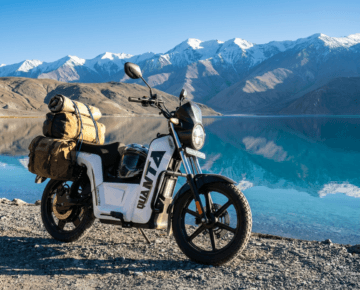
Riders are rightly sceptical of big claims. That is why endurance records matter. The Gravton Quanta is the first and only electric two-wheeler to complete the ride from Kanyakumari to Khardung La: 4,011.9 km across 11 states in 6.5 days, climbing to 18,000 feet, on roughly ₹400 of electricity. If it can do that, your daily commute is well within its comfort zone. Read more in our article on India’s only urban electric utility motorcycle.
Who Is Switching: Five Types of Riders Choosing Electric Over Petrol
- Daily commuters who want the lowest cost per kilometre and a calmer ride in traffic.
- Women riders who want motorcycle capability without the straddle, with easy mounting and confident handling.
- Gig and delivery riders for whom fuel is the largest daily cost and uptime matters.
- Families who want one dependable, comfortable vehicle for school drops, errands and weekends.
- Small business owners who want predictable running costs and a vehicle that can carry a load.
An Honest Look: When Petrol Still Makes Sense
We believe in the case for electric, and we also believe you should decide with the full picture. Choosing electric over petrol is not right for everyone.
- No practical way to charge. If you cannot charge at home, work or nearby, petrol may be simpler, unless a swappable battery model suits you.
- Very low usage. If you ride only a few kilometres a month, the fuel savings are small.
- Extreme daily distances with no charging on the way. Very long routes need planning.
- Upfront price. Electric vehicles often cost more at purchase. Compare total cost over several years, not just the sticker price.
How to Choose Electric Over Petrol in 2027: Six Steps
- Know your daily distance. Note how many kilometres you really ride, and add a 25 percent range buffer.
- Check where you will charge. A socket near your parking spot, or at work, is usually enough.
- Compare total cost. Add fuel, servicing and insurance over three to five years, and check any incentive that applies.
- Take a test ride. Feel the torque, the brakes and the comfort for yourself.
- Read the warranty. Check battery cover, service terms and what is excluded.
- Do a pre delivery check. Verify the paperwork, odometer, electricals and battery before you ride out.
Ready to choose electric over petrol? Start with our electric vehicle buying guide.
Why More Riders Choose Electric Over Petrol: The Bottom Line
Riders are not switching because it is fashionable. They are switching because the arithmetic is clear, charging at home is simple, range covers daily life, maintenance is lighter and the ride is better. Petrol still has its place, and the right choice depends on how you ride. But for the daily rider doing the sums as 2027 begins, electric over petrol is increasingly the sensible answer.
Try it yourself. Numbers help, but a ride settles it. Book a test ride on the Gravton Quanta and see how an electric motorcycle fits your day.
Ready to Feel the Difference?
Book a test ride and compare it with your petrol bike on your own route.
Book a Test Ride Call 7995252220Frequently Asked Questions
Why do more riders choose electric over petrol?
Riders choose electric over petrol mainly for the lower running cost, simple home charging, lighter maintenance, a smoother ride and range that now covers daily life. The savings grow with the distance ridden, and the upfront price premium is recovered through fuel savings over time.
Is it cheaper to run an electric bike than a petrol bike?
Generally yes. At ₹115 per litre and 45 km per litre, petrol costs about ₹2.56 per km. Gravton states about ₹0.10 per km for the Quanta, and even a more conservative ₹0.31 per km at a typical home tariff is far lower. Actual costs depend on your tariff, riding and the vehicle.
How long does it take to recover the higher upfront price of an electric bike?
It depends on the price difference and how much you ride. As an illustration, with a ₹30,000 premium, a rider covering 30 km a day recovers it in about 16 months, 50 km a day in about 10 months and 80 km a day in about 6 months, based on fuel savings alone.
Do electric two-wheelers need less maintenance?
Yes. They have no engine oil, spark plugs, clutch, exhaust or air filter to service, so there are fewer parts to wear out. Brakes, tyres, suspension and the battery still need care, so follow the manufacturer's service schedule.
Can I charge an electric bike at home?
Most riders do. Many electric two-wheelers charge from a standard 3 pin socket with a portable charger, usually overnight. Use a properly earthed socket, avoid extension boards and follow the manufacturer's instructions.
What if I live in an apartment with no charging point?
Check whether your parking area has a socket you can use, and speak to your housing society about approval and metering. Charging at the office also works. Some models offer swappable batteries, which can remove the need to charge at home.
Is range a problem for daily commuting?
For most daily commutes, no. A vehicle with a claimed range of 125 to 165 KM covers several days of a typical commute between charges, especially when you plan with a 25 percent buffer for real-world conditions.
Are electric bikes safe for long-term use?
Safety depends on the battery chemistry, build quality, certification and charging habits. LFP-family chemistries such as LMFP are known for strong thermal stability. Use the approved charger, charge safely and buy from an established manufacturer with clear warranty terms.
When does a petrol bike still make sense?
If you have no practical way to charge, ride very long distances every day on routes with no charging, or need the lowest possible upfront price and ride very little, a petrol bike can still be the better fit. For most daily riders, the running cost gap favours electric.
About this article. Published by Gravton Motors, Hyderabad, an electric two-wheeler manufacturer, so Gravton details are manufacturer-provided. Cost figures are illustrative and depend on fuel prices, electricity tariffs, vehicle and riding pattern. Range figures are claimed figures.
Website: www.gravton.com | Email: connect@gravtonmotors.com | Phone: 7995252220
Disclaimer: This article is published by Gravton Motors Pvt. Ltd. for general informational purposes only. The insights, opinions, estimates and recommendations shared here are illustrative, may not apply to every vehicle, location or situation, and do not constitute professional, technical, legal or financial advice. While we aim to be accurate, Gravton Motors makes no guarantee of the accuracy, completeness or timeliness of the content and cannot be held responsible for any loss, damage or inconvenience arising from reliance on it. Always refer to your vehicle's owner's manual and consult the manufacturer or a qualified professional before acting. References to third-party organisations and links are provided for convenience and do not imply endorsement.
-
Why More Riders Choose Electric Over Petrol in 2027
Riders are doing the sums again as 2027 begins. See the real cost gap, what electric saves over five years, and when petrol still makes sense.
-
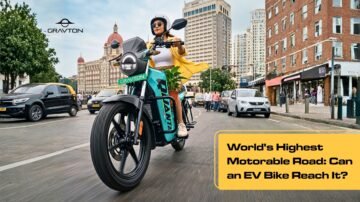
World’s Highest Motorable Road: Can an Electric Bike Conquer the World’s Highest Roads?
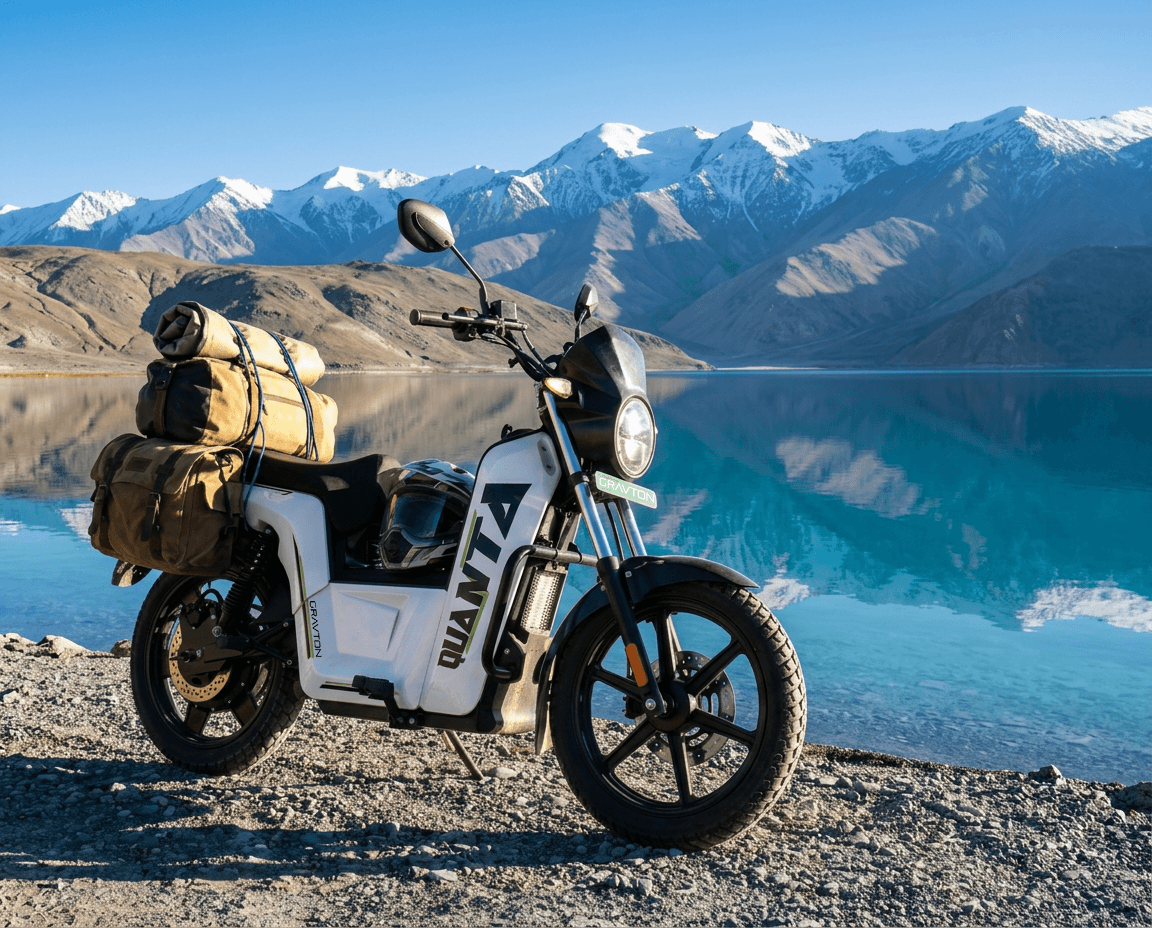
The World’s Highest Motorable Road in Ladakh presents a formidable challenge for riders and machines alike. But can an electric bike handle extreme altitude, cold temperatures, steep climbs and remote roads? Explore the engineering challenges, the realities of high-altitude EV riding and what Gravton Quanta’s Kanyakumari to Khardung La record tells us about electric mobility.
-
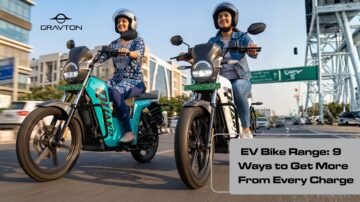
Maximising EV Bike Battery Range: How to Get More Kilometres From Every Charge
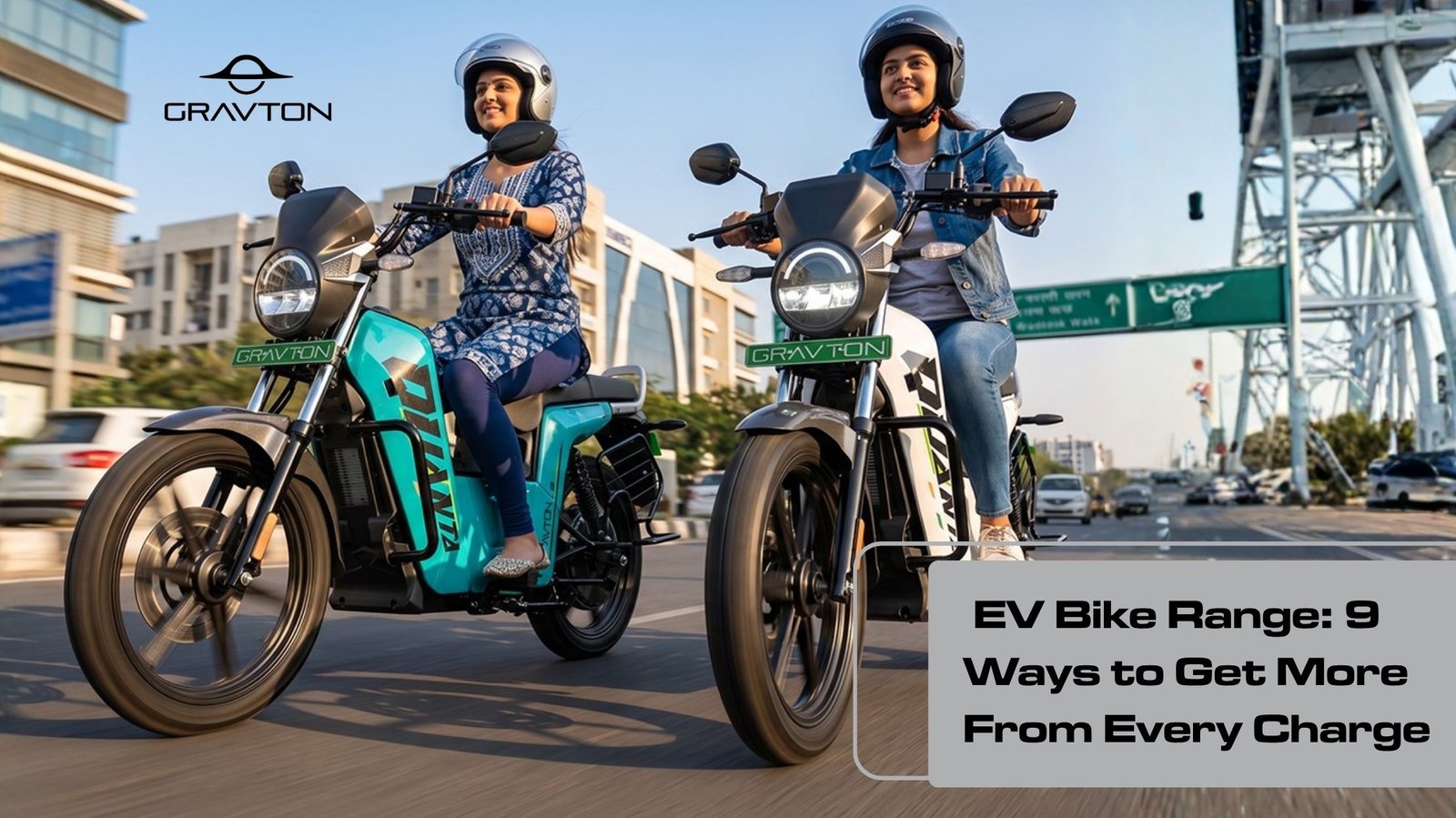
Getting the most range from an EV bike is not just about battery capacity. Riding speed, throttle control, regenerative braking, riding modes, tyre pressure and charging habits all influence how far you travel. Learn how to make every charge count, with practical examples from the Gravton Quanta.