A commuter electric vehicle is built for the ride most of us make every day: home to work, college or the market and back. Pick the right electric commuter bike and your daily travel gets cheaper, quieter and simpler. Pick the wrong one and you end up with range anxiety, a charger that does not fit your life and a bill you did not expect.
This guide explains what a commuter electric vehicle is, what it really costs to run, how much range you need, which features matter and what to check before you buy an electric commuter scooter or motorcycle in India.
Choosing a commuter electric vehicle, in short
- Start with your daily distance. Divide it by 0.75 to find the minimum claimed range you need.
- Compare running cost, not just price. A rider covering 40 km a day saves about ₹2,219 a month on energy in our model.
- Check charging first. A safe, earthed socket near your parking spot is usually all an electric commuter bike needs.
- Read the warranty, including what it covers for the battery and for commercial use.
- Look at service support near your home and workplace.
- Test ride on your own route, with your usual load.
What Is a Commuter Electric Vehicle?
A commuter electric vehicle is an electric two-wheeler designed for regular daily travel in cities and suburbs. It is usually a step-through electric scooter or a commuter-style electric motorcycle, built around a practical range, easy home charging, low running cost and steady, predictable performance. Top speed matters less than reliability, comfort and cost per kilometre.
The same idea applies to electric three-wheelers and small electric cars, but in India the phrase mostly describes electric scooters and motorcycles, which is where most daily commuting happens.
Why Riders Are Choosing an Electric Commuter Bike
- Lower running cost. Electricity costs a fraction of petrol per kilometre, and commuters ride the same route every day, so the saving repeats.
- Less routine maintenance. There is no engine oil, spark plug or clutch to service, so there is typically less routine servicing.
- Smooth, quiet riding. Instant torque makes stop-start traffic easier, and there are no gears to manage.
- Charging at home. You refuel overnight, with no detour to a petrol pump.
- Cleaner city air. An electric two-wheeler has no tailpipe emissions where you ride.
For a closer look at the numbers, read why more riders are choosing electric over petrol.
Types of Commuter Electric Vehicle: Scooter, Motorcycle and E-Bike
| Type | Best for | Think about |
|---|---|---|
| Electric commuter scooter | City commutes, short trips, riders who want a step-through frame | Underseat storage, wheel size and ground clearance |
| Electric commuter motorcycle | Longer commutes, higher loads, mixed city and highway roads | Range at higher speeds and service access |
| Step-through electric motorcycle | Riders who want motorcycle stability with easy mounting | Payload, brakes and torque on gradients |
| Electric bicycle or very low-power vehicle | Short, slow, last-mile trips | Registration and license rules depend on power and speed |
Registration rules depend on certified power and speed, so check the vehicle’s documents before you buy.
How Much Does an Electric Commuter Bike Save? The Real Numbers
Take petrol at ₹110 per litre and a bike that gives 45 km per litre. That is about ₹2.44 per km. Home electricity at ₹8 per kWh and about 35 Wh per km costs about ₹0.31 per km, roughly 8 times less. Over a month of commuting, the gap adds up.
| Commute | Petrol a month | Electric a month | Saved a month | Time to recover a ₹30,000 price premium |
|---|---|---|---|---|
| Short commute 20 km a day | ₹1,271 | ₹162 | ₹1,109 | 27 months |
| Typical commute 40 km a day | ₹2,542 | ₹324 | ₹2,219 | 14 months |
| Long commute 60 km a day | ₹3,813 | ₹485 | ₹3,328 | 9 months |
Assumes 26 riding days, petrol at ₹110 per litre and 45 km per litre, electricity at ₹8 per kWh, 35 Wh per km at the battery and 90% charging efficiency. The ₹30,000 premium is an illustrative figure, not a quote. Energy cost only. Insurance, maintenance and financing are not included.
How Much Range Does a Commuter Electric Vehicle Need?
Claimed range is measured under standard conditions. Real roads, loads, traffic and heat reduce it, so plan with about 25 percent less. The rule is simple: claimed range needed = daily distance divided by 0.75, or twice that if you want to charge only every second day.
| Daily distance | Minimum claimed range (charge daily) | Comfortable claimed range (charge every second day) |
|---|---|---|
| 20 km a day | 27 km | 53 km |
| 40 km a day | 53 km | 107 km |
| 60 km a day | 80 km | 160 km |
| 80 km a day | 107 km | 213 km |
Add a little more if you carry a heavy load, ride on hills or live somewhere very hot or cold. For habits that stretch every charge, read our guide to maximising EV bike battery range.
Key Features to Compare in an Electric Commuter Bike
- Real-world range, not just the claimed figure. Ask what range to expect with a rider and a bag.
- Battery and warranty. Check the battery chemistry, how long the warranty runs and what it covers.
- Motor and torque. Look for good pull from a standstill and on gradients, not only top speed.
- Charging. Check charging time, the charger type and whether it uses a standard socket.
- Payload and ground clearance. Both matter on Indian roads with speed breakers and potholes.
- Brakes and tyres. Dual disc brakes with combined braking add confidence in traffic.
- Telematics. Live tracking, battery information and alerts are useful for daily riders and fleets.
- Service network, spares and response time near your home and workplace.
- On-road price, including insurance, registration and fees.
Charging a Commuter Electric Vehicle at Home
Most electric commuter scooters and motorcycles charge from a standard 3 pin socket, usually overnight. Use the maker’s charger on a properly earthed socket, avoid extension boards and avoid charging a hot battery straight after a long ride. For a deeper guide, see electric two-wheeler charging in India and our tips on charge time, cost and battery life.
Heat, Rain and Roads: How Conditions Affect an Electric Commuter Scooter
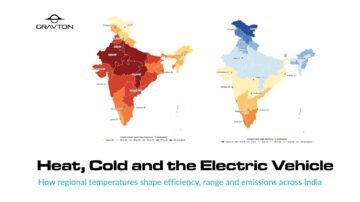
- Heat: In our illustrative model a typical electric two-wheeler keeps about 95% of its range at 40 °C. Park in shade and let a hot battery cool before charging.
- Cold: Range drops more in cold weather, mostly on early mornings and in the hills, so plan a larger buffer.
- Monsoon: Choose good ground clearance and follow the maker’s water-exposure guidance.
- Roads: Wheel size, suspension and clearance matter more than top speed on broken roads.
Registration, License and Insurance for an Electric Commuter Bike
Electric two-wheelers above 250 W rated power or 25 km/h top speed are classified as motor vehicles and need registration, a valid license and insurance. Many states also offer road tax or registration benefits for electric vehicles, but these are time-bound, so confirm the current position with the dealer. Read more in our guide to license and registration for electric vehicles, and wear a certified helmet whatever you ride.
Electric Commuter Bike Buying Checklist: 10 Questions
- How far is my daily commute, and how much claimed range does that need?
- Can I charge safely at home or at work?
- What is the full on-road price, in writing?
- Is any state road tax or registration benefit valid today and shown on the invoice?
- What does the battery warranty cover, and for how long?
- Where is the nearest service centre, and how long do repairs take?
- What is the rated payload, and does it suit my load?
- How does it handle my roads, with speed breakers and rain?
- Does it include tracking or battery information?
- Have I test ridden it on my own route?
For a wider buyer guide, see our electric vehicle buying guide.
Is a Commuter Electric Vehicle Right for You? Who Should Wait
- Good fit: daily riders with a predictable route, a place to charge and a commute of 10 to 60 km a day.
- Think twice: if you cannot charge at home or work and public charging is far away.
- Think twice: if your routes regularly exceed your planning range with no top-up option.
- Wait and compare: if no service centre is close to you, or the warranty terms are unclear.
The Gravton Quanta as a Commuter Electric Vehicle
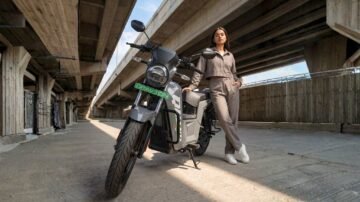
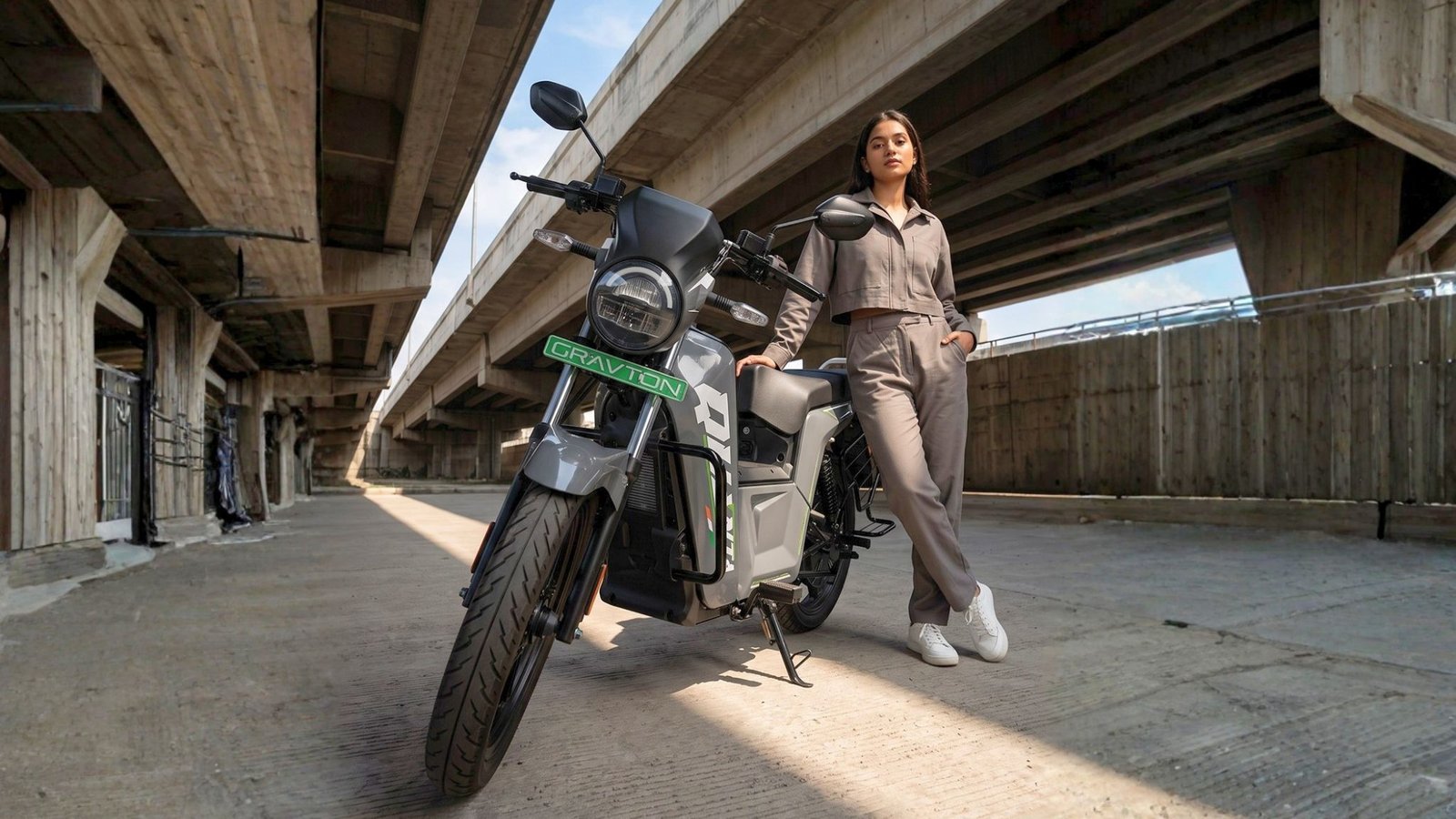
The Gravton Quanta is a step-through electric motorcycle designed and built in Hyderabad by Gravton Motors, which develops its motors, controllers and batteries in-house. It is aimed at the everyday commuter who wants motorcycle stability with easy riding.
- Range: up to 125 KM (Quanta S) and up to 165 KM (Quanta S+), claimed.
- Motor and battery: a BLDC hub motor with 172 Nm of torque, and an LMFP battery.
- Performance and capacity: up to 75 km/h, a 150 KG payload, 190 mm ground clearance and 33% gradability.
- Safety and build: dual disc brakes with combined braking, 17-inch alloy wheels and a rib cage chassis.
- Charging and connectivity: a portable charger that works on a standard 3 pin socket, about 5.4 hours (confirm for your variant), and the GOTAC telematics platform.
- Warranty: 3 years or 30,000 KM.
Here is how the claimed range translates into commuting days, using the planning rule in this guide.
| Model | Planning range | 20 km a day | 40 km a day | 60 km a day |
|---|---|---|---|---|
| Quanta S (up to 125 KM claimed) | 94 km | 4.7 days | 2.3 days | 1.6 days |
| Quanta S+ (up to 165 KM claimed) | 124 km | 6.2 days | 3.1 days | 2.1 days |
Planning range is 75% of the claimed figure. Claimed ranges are manufacturer figures, and real-world range varies with load, speed, terrain and conditions. Gravton states a running cost of about ₹0.10 per km, which depends on tariff and riding pattern.
Ready to Try a Commuter Electric Vehicle?
Book a test ride on the Gravton Quanta and see how it fits your daily route.
Book a Test RideExplore the QuantaFrequently Asked Questions About Commuter Electric Vehicles
What is a commuter electric vehicle?
A commuter electric vehicle is an electric two-wheeler, usually a scooter or motorcycle, designed for daily point-to-point travel in cities and suburbs. It prioritises low running cost, comfortable range, easy charging and dependable service over top speed.
What is the best electric commuter bike?
There is no single best electric commuter bike. Match the bike to your daily distance, load, charging access and budget. Check real-world range, battery warranty, service support, certified safety features and total running cost, and test ride it on your own route.
How far should an electric commuter bike go on one charge?
Take your daily distance and divide it by 0.75 to allow for real-world conditions. A 40 km daily commute needs a claimed range of at least about 53 km to charge once a day, and about 107 km to charge only every second day.
Is an electric commuter scooter cheaper to run than a petrol scooter?
On energy cost, yes. In an illustrative model with petrol at ₹110 per litre and 45 km per litre, and home electricity at ₹8 per kWh, petrol costs about ₹2.44 per km and electric about ₹0.31 per km, roughly 8 times less.
How long does it take to recover the higher price of an electric commuter bike?
It depends on the price difference and how much you ride. With an illustrative premium of ₹30,000, a 40 km daily commute recovers it in about 14 months on energy savings alone.
Can I charge a commuter electric vehicle at home?
Usually yes. Most electric commuter scooters and motorcycles charge from a standard 3 pin socket, ideally earthed and close to your parking spot. Avoid extension boards, and check society rules in an apartment.
Do electric commuter bikes work in heat and rain?
Yes. Heat slightly reduces range, and in our illustrative model a typical electric two-wheeler keeps about 95% of its range at 40 °C. Look for good ground clearance and sealed electricals for rain, and follow the maker's water-exposure guidance.
Do I need a license and registration for an electric commuter bike?
Electric two-wheelers above 250 W rated power or 25 km/h top speed are classified as motor vehicles and need registration and a valid license. Confirm the certified figures on the vehicle's documents.
Are there subsidies for commuter electric vehicles?
Incentives for electric two-wheelers have changed over time and are often time-bound. Check whether any central or state benefit applies on the day you buy, and ask for it to be shown on the invoice.
What should I check before buying an electric commuter bike?
Check real-world range, battery warranty and what it covers, charging time, service network, payload, brakes, ground clearance, certified safety features, the on-road price and a test ride on your own route.
About this article. Published by Gravton Motors, Hyderabad, an electric two-wheeler manufacturer, so Gravton details are manufacturer-provided. Running-cost figures are illustrative and based on stated assumptions. Prices, taxes, incentives and policies change, so confirm them before you buy.
Website: www.gravton.com | Email: connect@gravtonmotors.com | Phone: 7995252220
Disclaimer: This article is published by Gravton Motors Pvt. Ltd. for general informational purposes only. The insights, opinions, estimates and recommendations shared here are illustrative, may not apply to every vehicle, location or situation, and do not constitute professional, technical, legal or financial advice. Prices, taxes, incentives and policies change and must be confirmed before purchase. While we aim to be accurate, Gravton Motors makes no guarantee of the accuracy, completeness or timeliness of the content and cannot be held responsible for any loss, damage or inconvenience arising from reliance on it. Always refer to your vehicle's owner's manual and consult the manufacturer or a qualified professional before acting. References to third-party organisations are provided for convenience and do not imply endorsement.