Gravton Motors
Electric Vehicle Charge: How Long It Takes, What It Costs and How to Protect Your Battery
Everything you want to know about electric vehicle charge, in plain language: charging levels, time, cost, home setup, public stations and the habits that keep your battery healthy for years.
By Gravton Motors|2 November 2026|16 min read
If you are new to electric vehicles, the first questions are almost always about charging. How long does an electric vehicle charge take? What does it cost? Can I do it at home? Will charging every day hurt the battery? This guide answers each of them clearly, with just enough science to explain why the answers are what they are, so every electric vehicle charge is faster, cheaper and kinder to your battery.
The Short Answer
How long: a home electric vehicle charge usually takes a few hours to overnight, about 5 to 6 hours for a two-wheeler and about 6 to 10 hours for a car on an AC charger. A DC fast charger can add roughly 10 to 80 percent in about 45 to 60 minutes for many cars.
Cost: energy added in kWh x your tariff, plus about 10 percent for losses. Home charging is usually much cheaper than public charging.
Battery care: for every electric vehicle charge, avoid long spells near 0 percent, use slow AC charging for daily needs, keep the vehicle cool and use the approved charger. LFP and LMFP batteries tolerate regular full charges better than NMC batteries, which last longer if daily charging stays near 20 to 80 percent.
What an Electric Vehicle Charge Actually Means: kW, kWh and State of Charge
Three terms explain almost everything about an electric vehicle charge, and they are easy to mix up.
- kWh (kilowatt-hour) is energy, the size of the battery's "tank". A 3 kWh two-wheeler battery holds far less than a 40 kWh car battery.
- kW (kilowatt) is power, the speed of the "pump". A 7.4 kW charger delivers energy about twelve times faster than a 0.6 kW charger.
- State of charge (SoC) is the percentage of the battery that is full, the number on your dashboard or app.
The basic rule follows from these: charging time is roughly battery size divided by charger power, with some extra time for losses and for the slowdown near the top. Every electric vehicle charge follows this same logic. Around 10 percent of the energy from the wall is lost as heat during an electric vehicle charge, so the meter reads a little more than what ends up in the battery.
Electric Vehicle Charge Levels Explained: AC, DC Fast and Swapping
Not every electric vehicle charge works the same way. The main options differ in speed, cost and where you can use them.
| Method | Typical power | Where | Best for |
|---|---|---|---|
| Slow AC from a household socket | About 0.5 to 3.3 kW | Home, office, shop | Overnight and daily top-ups for two-wheelers, and cars where permitted |
| AC wall charger or public AC point | 3.3 to 7.4 kW (up to 22 kW on three-phase, if the vehicle supports it) | Home, malls, parking lots | Daily car charging and longer stops |
| DC fast charging | 25 to 150 kW | Highways and charging hubs | Trips and quick top-ups |
| Ultra-fast DC | 150 to 350 kW | Select highway hubs | Only vehicles built to accept very high power |
| Battery swapping | Minutes per swap | Swap stations | Two-wheelers and three-wheelers with swappable packs, and fleets |
You may also see "Level 1, Level 2 and Level 3" used, especially in the United States. Level 1 is a basic household socket, Level 2 is a faster AC charger, and Level 3 means DC fast charging.
Choosing the right method for each electric vehicle charge saves both time and money.
Your electric vehicle charge speed is set by the slowest link in the chain. That can be the charger, the cable, the vehicle's onboard charger, or the battery itself if it is cold, hot or nearly full. A 150 kW station will not charge a vehicle faster than that vehicle can accept.
How Long Does an Electric Vehicle Charge Take?
A quick estimate of your electric vehicle charge time helps you plan the day. Use this simple formula before you plug in:
Charging time (hours) = battery size (kWh) x percentage to add ÷ (charger power in kW x 0.9)
The 0.9 allows for roughly 10 percent charging loss. Here is what it gives for common cases.
| Vehicle and battery | Charger | Approximate time |
|---|---|---|
| Electric two-wheeler, 3 kWh | 0.6 kW portable charger, 0 to 100% | About 5.5 hours |
| Small electric car, 30 kWh | 3.3 kW AC, 0 to 100% | About 10 hours |
| Mid-size electric car, 40 kWh | 7.4 kW AC, 0 to 100% | About 6 hours |
| Large electric car, 60 kWh | 7.4 kW AC, 0 to 100% | About 9 hours |
| Mid-size electric car, 40 kWh | 50 kW DC fast, 10 to 80% | Roughly 45 to 60 minutes |
These are estimates. The DC fast figure is higher than the ideal 37 minutes from the formula because charging power tapers as the battery fills. Real times vary with temperature, the vehicle's maximum charge rate and whether the station shares power between vehicles.
Four things change your real electric vehicle charge time: the temperature of the battery, how full it already is, how much power the station actually delivers, and the maximum rate your vehicle accepts.
Electric Vehicle Charge Cost: What You Will Actually Pay
Knowing the cost of each electric vehicle charge also helps you compare home and public options. Working it out is straightforward: energy added from the wall (kWh) x your tariff per kWh. Energy from the wall is the battery energy divided by 0.9, because of charging losses.
For example, to fill a 40 kWh battery from empty you draw about 44 kWh from the wall. At an illustrative home tariff of 8 rupees per kWh that is about 356 rupees. At a public charger priced at 20 rupees per kWh it is about 889 rupees.
| Vehicle | Energy use (battery) | Cost per km at home (8 rupees per kWh) | Cost per km at a public charger (20 rupees per kWh) |
|---|---|---|---|
| Electric two-wheeler | About 0.035 kWh per km | About 0.31 rupees | About 0.78 rupees |
| Electric car | About 0.15 kWh per km | About 1.33 rupees | About 3.33 rupees |
Illustrative figures only. Electricity tariffs differ by state, time of day and operator, public chargers add taxes and sometimes idle or parking fees, and energy use depends on speed, load and conditions.
How to lower your electric vehicle charge cost
- Charge at home whenever you can. It is usually the cheapest source of energy.
- If your electricity provider offers time-of-day tariffs, charge during the cheaper hours.
- Use public DC fast charging for trips and emergencies, not for daily top-ups.
- Leave the charger as soon as you are done, to avoid idle fees and to free the point for others.
- Drive smoothly. Lower energy use per km directly lowers every charge's cost.
Home Electric Vehicle Charge: Setup, Sockets and Safety
Most electric vehicle charge sessions happen at home, because vehicles spend most of the day parked. Doing it safely takes a few checks.
- Check where you park. You need a socket or a wall charger location close to the vehicle, protected from rain and not blocking walkways.
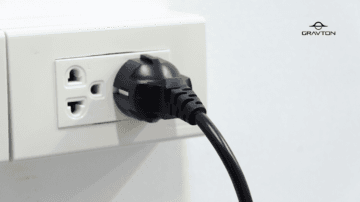
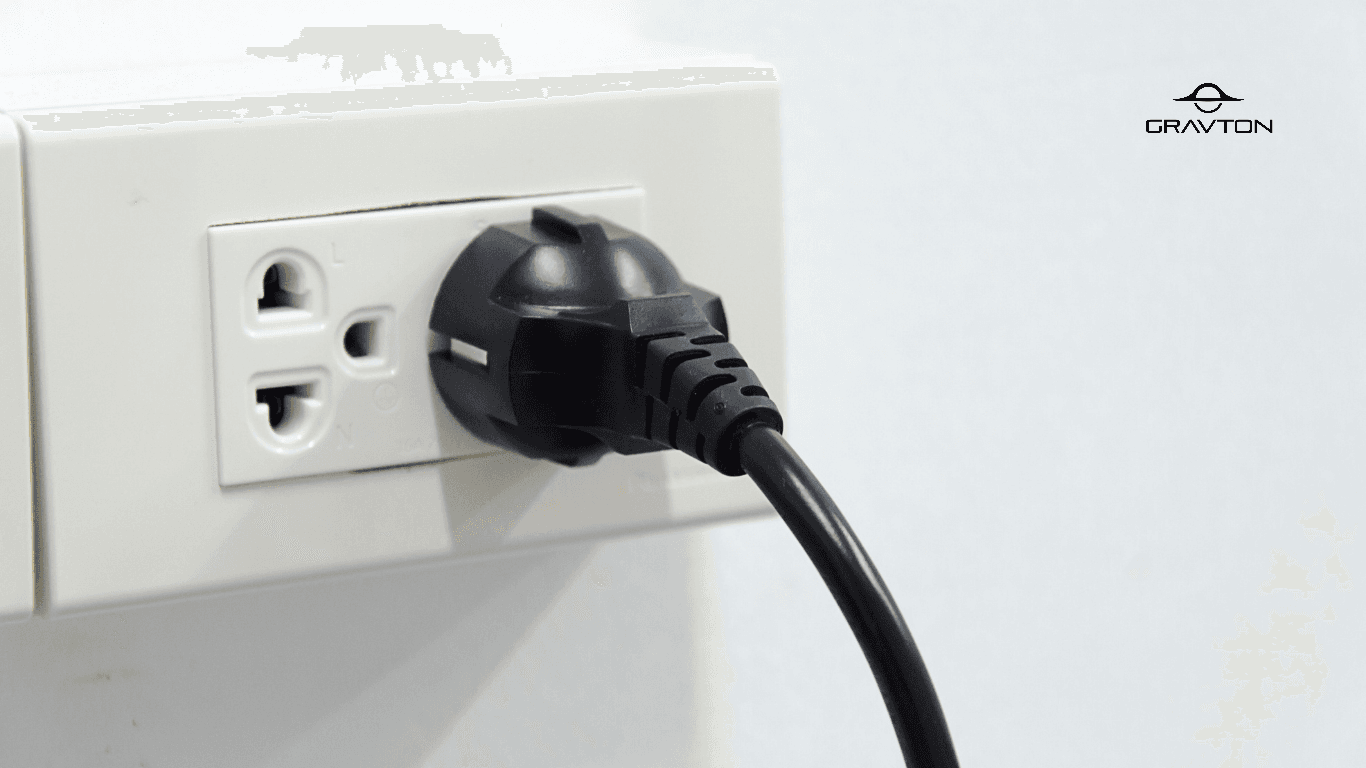
- Use a dedicated, properly earthed socket. Read the charger's rating label and make sure the socket and wiring can carry that load for hours.
- Avoid extension boards, multi-plugs and adapters. They add resistance and heat. Plug directly into the wall.
- For cars, consider a wall charger. A licensed electrician can install a wall charger on a suitable circuit, which is faster and safer than a household socket for sustained charging.
- Protect the circuit. A working MCB and an ELCB or RCCB add protection against faults and leakage.
- Use only the approved charger and cable. Chargers are matched to the battery and its management system.
- Keep it dry and ventilated. Charge away from fuel, paper, fabric and anything flammable.
- Check regularly. Look for frayed cables, loose pins, discoloured plugs or a socket that runs warm, and replace anything damaged.
Stop charging and get it checked if you notice a burning or chemical smell, unusual heat from the battery, charger or socket, hissing, swelling, or repeated error messages.
A safe home setup makes every electric vehicle charge routine and worry-free. If you live in an apartment, speak to your housing society about approvals, a socket in the parking area and how the electricity will be metered. Many societies now support it, but practice varies. For a two-wheeler focused view, read our guide to electric two-wheeler charging in India.
Public Electric Vehicle Charge: How to Use a Charging Station
A public electric vehicle charge is simple once you know the sequence.
- Find a suitable station. Use a charging map or the operator's app. Check the connector type, the power in kW and whether the point is working right now.
- Park and plug in. Make sure the vehicle is off and parked safely, then connect the cable firmly to the vehicle's port.
- Start the session. Depending on the operator you will use an app, an RFID card or a QR code, and pay by UPI, card or wallet.
- Check that it is charging. Look for the indicator on the charger and on your dashboard or app, and note the kW being delivered.
- Monitor and stop on time. For fast charging, stop at about 80 percent unless you need more range. Close the session in the app and unplug.
- Return the cable and move on. Hang the cable neatly and free the bay.
Practical tips: keep a buffer of at least 20 percent when planning trips, have a second charging option in mind in case a station is down, and never force a connector that does not fit.
How Often Should You Charge, and to What Percentage?
The best electric vehicle charge pattern is regular and moderate rather than rare and extreme. Lithium batteries have no memory effect, so topping up a little often is perfectly healthy. What matters more is how long the battery sits at the extremes. A very low charge stresses the cells, and for some chemistries a very high charge held for days does too.
| Battery chemistry | Daily charging guidance | Notes |
|---|---|---|
| NMC or NCA | Keep roughly 20 to 80 percent for daily use | Charge to 100 percent only before long trips, and avoid leaving it full for days |
| LFP | Regular 100 percent charging is generally fine | A periodic full charge helps the system read the state of charge accurately |
| LMFP | Generally follows the LFP pattern | A newer chemistry, so follow your manufacturer's specific guidance |
The simplest habit for any chemistry: plug in when it suits you, avoid running the battery close to empty, and do not leave it parked at a very low or very high charge for long periods. Always check what your own manufacturer recommends, since battery management systems differ.
LMFP, LFP and NMC: Why Chemistry Changes Your Electric Vehicle Charge Habits
The battery chemistry inside your vehicle decides how forgiving it is. Here is the short science, kept practical.
| NMC | LFP | LMFP | |
|---|---|---|---|
| Full name | Nickel manganese cobalt | Lithium iron phosphate | Lithium manganese iron phosphate |
| Energy density | Highest of the three | Moderate | Often cited as roughly 15 to 20 percent above LFP |
| Typical cycle life | Roughly 1,000 to 2,000 cycles | Roughly 2,000 to 4,000 cycles or more | Aims for LFP-like longevity |
| Thermal stability | Lower | High | High, in the LFP family |
| Tolerance to full charge | Prefers avoiding long time at 100% | Tolerant | Generally tolerant |
Values are typical ranges and vary by manufacturer, cell grade and operating conditions.
Why it matters for your electric vehicle charge routine. NMC cells use a high-voltage cathode, and holding them at a high state of charge speeds up unwanted side reactions inside the cell. LFP and LMFP have a more stable crystal structure and a flatter voltage curve, so they cope better with full charges and with heat. That is why LFP-family batteries have become popular in two-wheelers, buses and mainstream cars, where safety and long life matter as much as range.
For anyone planning an electric vehicle charge routine, chemistry is the first thing to check. LMFP adds manganese to the iron phosphate structure. The result is a higher operating voltage and more energy in the same space, while keeping the thermal stability that LFP-type batteries are known for. It is a newer chemistry, so confirm the charging guidance that comes with your specific vehicle.
Why Does My Electric Vehicle Charge Slow Down After 80 Percent?
It is one of the most common questions about electric vehicle charge speed, and the answer is built into how lithium batteries are charged.
- Constant current, then constant voltage. The charger first pushes a steady current until the battery reaches its voltage limit. After that it holds the voltage and lets the current fall, so the last stretch is slow.
- Protecting the cells. A nearly full cell cannot safely accept fast charging. The battery management system reduces power to prevent damage.
- Heat. If the pack is hot, the system lowers the rate. The battery heats up during fast charging itself, which can add to the slowdown.
The practical lesson: on a trip, an electric vehicle charge from 10 to 80 percent is usually quick, while 80 to 100 percent can take almost as long as everything before it. Unless you need the extra range, unplug at about 80 percent and keep moving.
Does Fast Charging Damage the Battery?
A fast electric vehicle charge is a tool, not a habit. Honest answer: it causes a little wear if you do it all the time, and almost not at all if you do it occasionally. Fast charging creates more heat and pushes high current into the cells, particularly at high charge levels. Over many cycles that can add modest extra wear.
- Daily needs: use slow AC charging at home or work.
- Trips and emergencies: use DC fast charging freely. It is what it is for.
- Very cold battery: avoid fast charging until the pack has warmed up, because high current into cold cells can cause damage. Most vehicles limit the rate automatically.
- Ideal pattern: mostly slow charging, occasional fast charging, and rarely fast charging to 100 percent.
How to Make Your Electric Vehicle Charge Last Longer
"Last longer" means two things: more kilometres from each charge, and more years before the battery loses capacity. These habits help with both.
- Avoid long spells at 0 percent. Recharge before the battery gets very low, and do not leave it parked empty.
- Mind the top end, if your chemistry needs it. For NMC, keep daily charging near 80 percent. For LFP and LMFP, full charges are generally fine.
- Use slow charging for daily needs. It is gentler on the cells and cheaper.
- Keep the battery cool. Park in the shade, avoid heat soak, and let a very hot pack cool a little before a long charge.
- Warm a cold battery before fast charging. If your vehicle has preconditioning, use it before a fast charge in cold weather.
- Use the approved charger. Cheap or mismatched chargers can damage the pack and void warranties.
- Top up in small bites. Several short charges are as healthy as one long one.
- Store at a partial charge. For weeks of storage, leave the battery at about 40 to 60 percent in a cool, dry place and top it up every few weeks.
- Drive smoothly. Gentle acceleration, steady speeds and early braking cut energy use and use regenerative braking where available.
- Keep tyres properly inflated. Low pressure raises rolling resistance and reduces range.
- Follow software and service updates. Battery management improvements often arrive through updates and scheduled services.
- Use the app to watch the trends. If range drops suddenly, or the battery heats up, get it checked early.
Small habits compound, because each of these changes how every electric vehicle charge ages your battery. For a closer look at riding technique, see our guide to getting more from every charge: electric bike range and battery maintenance tips.
Heat, Cold and Rain: How Weather Affects Charging
Weather changes every electric vehicle charge, so a few adjustments help.
| Condition | What happens | What to do |
|---|---|---|
| Hot weather | Heat speeds up battery ageing and can limit charging power | Park in the shade, avoid charging in direct sun, and prefer slow charging on very hot days |
| Cold weather | Usable capacity drops and charging is slower, because cold cells accept less current | Precondition if available, charge right after a drive while the pack is warm, and expect shorter range |
| Rain | Connectors are sealed and designed for wet weather | Keep cables off standing water, wipe the plug and port if dirty, and never use damaged equipment |
Common Electric Vehicle Charge Problems and Quick Fixes
| Problem | Likely cause | What to try |
|---|---|---|
| Charging is slower than expected | Cold or hot battery, high charge level, a low-power charger, or a shared station | Check the charger's kW, try another point, or wait until the battery is at a better temperature |
| Charging will not start | Loose connection, wrong connector, payment or app issue, or a socket with no power | Reseat the plug, check the app, try another socket or station, and check your circuit breaker at home |
| Charging stops at about 80 percent | Normal fast-charge taper, or a limit set in the vehicle or app | Check your charge-limit setting and whether the session ended on its own |
| Charger or plug feels warm | Some warmth is normal, but excess heat can mean a poor connection or overloaded wiring | Stop, let it cool, inspect for damage, and have the wiring checked if it recurs |
| Range lower after a full charge | Cold weather, higher speeds, load, low tyre pressure, or battery ageing | Check tyre pressure and riding habits first, then ask for a battery health check if it persists |
Charging Myths That Cost You Money and Battery Life
- Myth: "You must always charge to 100 percent." Truth: it depends on the chemistry. Partial charges are healthy for every type.
- Myth: "Fast chargers ruin batteries." Truth: occasional use is fine. Constant fast charging adds modest wear.
- Myth: "Charging overnight is dangerous." Truth: with the approved charger, a sound socket and a battery management system, it is routine. Follow the safety steps above.
- Myth: "You must drain the battery before charging." Truth: lithium batteries have no memory effect. Top up whenever you like.
- Myth: "Rain makes charging unsafe." Truth: the equipment is designed for it. Keep things clean and undamaged.
- Myth: "Battery life is only about the battery." Truth: habits, heat and charging patterns matter as much as the cells themselves.
A Simple Weekly Charging Routine
A consistent routine keeps every electric vehicle charge predictable.
- Every day: plug in at a convenient time, avoid leaving the battery near empty, and use slow charging.
- Every week: check tyre pressure, inspect the charger cable and plug, and keep the charging port clean and dry.
- Every month: note your real range, and watch for sudden changes.
- Before a trip: charge higher than usual, plan stations with a 20 percent buffer and carry any adapters you need.
- Before storage: leave about 40 to 60 percent and keep the vehicle cool and dry.
Frequently Asked Questions
How long does an electric vehicle charge take?
The time an electric vehicle charge takes depends on battery size and charger power. As a guide, an electric two-wheeler with a 3 kWh battery takes about 5 to 6 hours on a small portable charger, a car with a 40 kWh battery takes about 6 hours on a 7.4 kW AC charger, and a DC fast charger can add roughly 10 to 80 percent in about 45 to 60 minutes for many cars.
How much does it cost to charge an electric vehicle?
The cost of an electric vehicle charge equals the energy you add, in kWh, multiplied by your tariff, plus about 10 percent for charging losses. As an illustration, filling a 40 kWh battery from empty costs about 356 rupees at 8 rupees per kWh at home and about 889 rupees at 20 rupees per kWh at a public charger. Tariffs vary by state and operator.
Can I charge an electric vehicle at home?
Yes. Most owners do. Two-wheelers usually charge from a standard 3 pin socket with a portable charger, and cars can charge from a properly wired socket or a wall charger installed by an electrician. Use an earthed socket, avoid extension boards and follow the manufacturer's instructions.
Is it okay to charge an electric vehicle to 100 percent?
It depends on the battery chemistry. LFP and LMFP batteries generally tolerate regular full charges well. NMC batteries last longer if you keep daily charging to roughly 20 to 80 percent and charge to 100 percent only before long trips. Follow your manufacturer's guidance.
How often should I charge my electric vehicle?
Charge whenever it is convenient and avoid letting the battery sit near empty. A small, frequent electric vehicle charge is better than a rare deep one. Small, frequent top-ups are fine because lithium batteries have no memory effect. Many owners plug in overnight, or whenever the battery drops below about 30 percent.
Does fast charging damage the battery?
An occasional fast electric vehicle charge causes little harm. Frequent fast charging adds modest extra wear because of heat and high current, especially at high charge levels. Use slow AC charging for daily needs and DC fast charging for trips and emergencies.
Why does my electric vehicle charge slow down after 80 percent?
Chargers switch from constant current to constant voltage near the top of the battery, so the current tapers to protect the cells. The battery management system also limits power when cells are hot or nearly full. Stopping a fast charge at about 80 percent usually saves time.
What is the difference between kW and kWh?
kWh measures energy, like the size of a fuel tank. kW measures power, like the speed of the pump. A 40 kWh battery filled by a 10 kW charger takes about 4 hours, ignoring losses and taper.
Can I charge an electric vehicle in the rain?
Yes. Charging equipment is designed to be safe in rain, with sealed connectors and safety interlocks. Keep cables and sockets clean and dry where possible, do not use damaged equipment, and avoid standing water.
How can I make my electric vehicle battery last longer?
Avoid long periods at 0 percent, and at 100 percent for NMC batteries, use slow AC charging for daily needs, keep the vehicle cool, use the approved charger, store at about 40 to 60 percent for long periods and drive smoothly.
What is LMFP battery chemistry?
LMFP stands for lithium manganese iron phosphate. It belongs to the LFP family and adds manganese to raise voltage and energy density, while keeping the strong thermal stability that makes LFP-type batteries popular.
Do I need a special charger for my electric vehicle?
Use the charger approved by your vehicle's manufacturer. Two-wheelers usually come with a portable charger. Cars use a cable that matches the charging port, and public stations list the connector types they support.
About this guide. Published by Gravton Motors, Hyderabad, an electric two-wheeler manufacturer. This is general guidance. Figures on electric vehicle charge time and cost are illustrative or typical ranges, and tariffs, charger power and battery behaviour vary. Always follow the charging and storage instructions in your vehicle's owner's manual.
Website: www.gravton.com | Email: connect@gravtonmotors.com | Phone: 7995252220