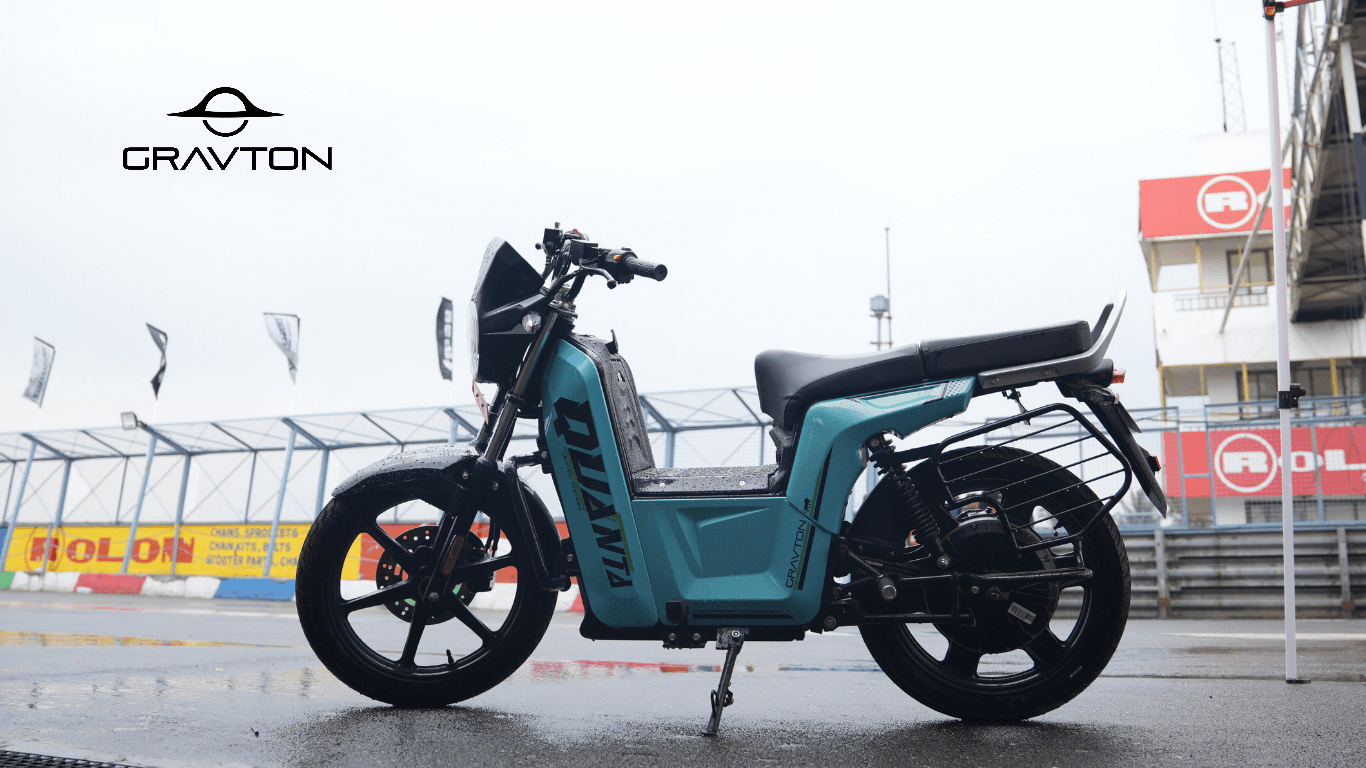
Electric Vehicle Buying Guide : Buying an electric two-wheeler is more than choosing a vehicle with a good range figure or an attractive price. It is a decision about how you travel every day, how much you spend on mobility, what performance you need, and how confidently your vehicle will serve you over the years.
With electric two-wheelers becoming an increasingly practical alternative to petrol-powered motorcycles and scooters, buyers have more choices than ever. But more choices also mean more questions. Is the advertised range enough for your daily commute? Should you prioritise speed or battery capacity? How do you compare your monthly EMI with the money saved on petrol? And does smart connectivity genuinely improve the ownership experience?
The answers depend on your usage, budget and expectations from the vehicle.
A well-informed purchase begins by looking beyond headline specifications and understanding how an electric two-wheeler will perform in your everyday life.
Here are seven essential things to consider before buying an electric two-wheeler in India.
1. Start With Your Usage Requirements, Not the Specifications
One of the most common mistakes buyers make is selecting an electric two-wheeler based on its advertised range, top speed or battery capacity before evaluating their own requirements.
The better approach is to start with a simple question: What do I need my vehicle to do every day?
A person travelling 15 km to work and back has different requirements from a delivery rider covering 70–100 km daily. Similarly, someone regularly travelling on uneven roads or carrying a pillion may prioritise vehicle stability, ground clearance, suspension, braking and build quality over a specification that looks impressive on paper.
Before comparing models, evaluate these five factors.
Electric Vehicle Buying Guide: Daily distance travelled
Calculate your average daily running, including your commute, shopping, family visits and other regular journeys. Do not base your decision solely on the distance between your home and workplace.
For example, if your daily travel is 35 km, you need a vehicle that can comfortably handle that distance with sufficient reserve for unexpected trips and changes in usage.
Road and riding conditions
Consider whether your regular routes include congested city traffic, flyovers, steep inclines, rough roads, potholes or semi-urban and rural stretches.
These conditions influence the importance of motor performance, torque delivery, wheel size, ground clearance, suspension and chassis design.
Load and passenger requirements
If you frequently carry a pillion, groceries, work equipment or delivery packages, evaluate the vehicle’s recommended payload and gross vehicle weight rating (GVWR).
A vehicle’s performance with one rider may differ from its behaviour under a heavier load. Your test ride should reflect your actual usage as closely as possible.
Charging access
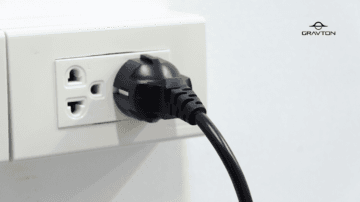
Do you have access to a household socket where you park? Can you charge overnight? Will you depend on a workplace or public charging point?
For many personal electric two-wheeler owners, convenient home charging is a significant advantage. However, buyers living in apartments or relying on street parking should establish a practical charging arrangement before purchasing.
Ownership duration
If you intend to keep the vehicle for several years, battery warranty, service availability, replacement costs, parts availability and long-term reliability deserve as much attention as the initial purchase price.
The right electric two-wheeler is the one that fits your daily requirements without forcing you to compromise on the things that matter most.
2. Why a Test Ride Matters More Than You Think – Electric Vehicle Buying Guide
A specification sheet can tell you a vehicle’s claimed range, motor rating, top speed, battery capacity and charging time. It cannot fully tell you how the vehicle feels when you ride it.
That is why a test ride should be an essential part of your electric two-wheeler buying decision.
Electric vehicles deliver torque differently from conventional petrol vehicles. Throttle response, acceleration, riding modes and vehicle balance can create a noticeably different riding experience. A test ride helps you understand whether that experience suits your comfort level and riding style.
What should you evaluate during a test ride?
Acceleration and throttle response: Check how smoothly the vehicle moves from a standstill and responds when you accelerate in traffic. Strong acceleration is useful, but predictable power delivery matters just as much.
Ride comfort: Evaluate the seating position, handlebar reach, foot placement and suspension over the types of roads you regularly use.
Handling and stability: Pay attention to how the vehicle behaves during turns, low-speed manoeuvres and changes in direction. Consider whether its weight and dimensions feel manageable.
Braking confidence: Test the braking response in a safe, controlled environment. Understand the braking system and how confidently you can bring the vehicle to a stop.
Performance under realistic conditions: If possible, ride on a route that includes ordinary traffic, a mild incline and uneven road surfaces. Ask the dealer about appropriate payload limits rather than testing beyond recommended conditions.
Riding modes: If the vehicle offers Eco, Power or Sport modes, experience the differences. Understand how the available modes affect speed, acceleration and energy consumption.
Electric Bike Range: How to Get More From Every Charge and Keep Your Battery Healthy
Why the test ride is especially important for electric motorcycles
Buyers moving from petrol motorcycles may have specific expectations regarding handling, riding posture, torque and road presence. A test ride helps establish whether an electric motorcycle delivers the kind of riding experience they want.
It also helps identify practical concerns before purchase, including seat height, ease of mounting and dismounting, manoeuvrability and comfort during longer journeys.
A useful test ride is not about determining whether a vehicle feels exciting for five minutes. It is about deciding whether you would be comfortable riding it every day.
3. Calculate Your EMI Against Petrol Savings, Not Just the Purchase Price
Electric two-wheelers are often associated with lower running costs. However, understanding the financial benefit requires more than comparing a petrol bill with an electricity bill.
You need to evaluate the monthly EMI, fuel or charging expenses, maintenance, insurance, battery warranty and the length of time you expect to own the vehicle.
This is known as a total cost of ownership (TCO) comparison.
Step 1: Calculate your petrol expenditure
Use the following formula:
Monthly petrol cost = Monthly kilometres ÷ Petrol vehicle mileage × Petrol price per litre
For example, assume you travel 1,200 km per month, your petrol motorcycle delivers 45 km/litre, and petrol costs ₹105 per litre.
Your estimated monthly petrol expense would be:
1,200 ÷ 45 × ₹105 = ₹2,800 per month
Your actual expenditure will depend on your vehicle’s real-world mileage and the petrol price in your location.
Step 2: Calculate your EV charging cost
The electricity cost depends on energy consumption, charging efficiency, your electricity tariff and the proportion of charging done at home or at public stations.
For an illustrative electric two-wheeler consuming 3 kWh per 100 km, travelling 1,200 km per month and using electricity at ₹8 per kWh:
1,200 × 3 ÷ 100 × ₹8 = ₹288 per month
This is an illustrative calculation, not a claim about the consumption of every electric two-wheeler. Actual energy consumption and charging costs vary by model, riding conditions and charging arrangements.
Step 3: Compare the monthly running costs
| Expense | Petrol motorcycle | Electric two-wheeler |
|---|---|---|
| Monthly distance | 1,200 km | 1,200 km |
| Assumed fuel or energy consumption | 45 km/litre | 3 kWh/100 km |
| Assumed fuel or electricity price | ₹105/litre | ₹8/kWh |
| Estimated monthly fuel or energy cost | ₹2,800 | ₹288 |
Under these assumptions, the electric vehicle saves approximately ₹2,512 per month on energy alone.
That amounts to approximately ₹30,144 over 12 months, before accounting for maintenance differences, financing, insurance, battery-related expenses and other ownership costs.
Step 4: Include the EMI
Your EMI depends on the on-road price, down payment, interest rate and loan tenure.
Consider a hypothetical example:
| Financial component | Amount |
|---|---|
| Electric two-wheeler on-road price | ₹1,20,000 |
| Down payment | ₹30,000 |
| Loan amount | ₹90,000 |
| Illustrative interest rate | 10% annually |
| Loan tenure | 36 months |
| Approximate monthly EMI | ₹2,907 |
The EMI is illustrative and assumes a standard reducing-balance loan without additional fees.
In this example, the EV’s estimated monthly energy saving of ₹2,512 offsets a substantial part of the ₹2,907 EMI, but does not cover it completely. The difference is approximately ₹395 per month before other costs and savings.
This is a more useful way to evaluate affordability than comparing the EMI with zero.
EV Industry in India 2027: Which States Will Lead Electric Mobility, Manufacturing and Jobs?
Step 5: Compare the total cost over your ownership period
A comprehensive comparison should include:
- On-road purchase price and down payment.
- Loan interest and processing fees.
- Petrol or electricity expenses.
- Routine servicing and repairs.
- Insurance and other recurring expenses.
- Battery replacement exposure outside warranty.
- Resale value at the end of ownership.
For an EV, also consider whether you can charge primarily at home or will frequently use paid public charging.
Research by the Council on Energy, Environment and Water has found that electric two-wheelers can have a lower total cost of ownership than comparable petrol vehicles. However, the actual benefit depends on the vehicle, annual distance travelled, financing, operating costs and resale assumptions.
The Government of India’s e-AMRIT Journey Cost Calculator is a useful starting point for estimating energy costs and potential savings.
The important question is not whether an electric vehicle has a lower running cost. It is whether the combined ownership economics make sense for your budget and usage.
4. Do You Really Need to Compromise on Range to Get Better Speed and Performance?
Range is one of the most visible specifications in electric vehicle marketing. Buyers naturally compare kilometres per charge, often assuming that the vehicle with the highest advertised range is the best choice.
But range is only one part of the performance equation.
Electric two-wheelers are engineered around a combination of battery capacity, motor output, vehicle weight, efficiency, speed, riding modes and intended use. These factors interact with one another.
Understand the difference between battery capacity and range
Battery capacity, measured in kilowatt-hours (kWh), indicates how much energy the battery can store. Range refers to how far the vehicle can travel using that energy under specified conditions.
Two vehicles with similar battery capacities can deliver different ranges because their motors, controllers, vehicle weight, aerodynamics and energy-management systems differ.
Likewise, two versions of the same vehicle can deliver different ranges when they use different battery capacities.
Understand certified range versus real-world range
An advertised or certified range is measured under specified test conditions. Your actual range can differ because of:
- Average riding speed and acceleration.
- Riding mode selection.
- Rider and passenger weight.
- Road gradient and surface conditions.
- Traffic patterns and frequent stopping.
- Tyre pressure and vehicle maintenance.
- Ambient temperature and battery condition.
If your regular travel requires 60 km per day, selecting a vehicle that claims exactly 60 km of range leaves little room for unexpected trips or changing conditions.
A sensible approach is to choose a vehicle with enough usable range to cover your normal travel with a reasonable reserve.
What about speed and performance?
Higher speed and aggressive acceleration can increase energy consumption. However, this does not mean every electric vehicle must sacrifice range to deliver good performance.
Motor efficiency, controller calibration, battery capacity and vehicle engineering all influence the outcome.
For example, a vehicle with a larger battery may provide both stronger performance and greater range than a smaller-battery version, although its price and weight may also be higher.
The better question is whether the vehicle delivers the right balance for your needs.
If you ride mainly in congested urban traffic, predictable acceleration, comfortable handling and sufficient reserve range may matter more than maximum speed.
If you frequently travel on inclines or carry a passenger or cargo, torque delivery and performance under load become more important.
If you cover long distances each day, range, charging time and battery durability deserve greater attention.
Look at riding modes before making your decision
Multiple riding modes can help adapt the vehicle to different situations.
An Eco mode may prioritise efficiency, while a Sport mode may allow stronger acceleration or higher speed. The exact behaviour depends on the manufacturer’s implementation.
Ask the dealer how each mode affects the vehicle’s performance and range. If range estimates are available for different modes, use those figures to understand the trade-off rather than relying on a single headline number.
You do not need the highest range or the highest top speed available. You need sufficient range, dependable performance and the right balance for your everyday riding.
5. Why Intelligent Telematics Matters in an Electric Two-Wheeler
An electric two-wheeler is not just a battery connected to a motor. Increasingly, it is a connected mobility product that can provide useful information about the vehicle and its operation.
Intelligent telematics combines vehicle data, communication systems and software to help owners monitor, locate and manage their vehicles through compatible digital platforms.
Depending on the model, features may include live location, trip information, vehicle-health alerts, geofencing, remote immobilisation and ride-related notifications.
These capabilities can improve convenience and provide additional visibility into vehicle usage.
Vehicle location and security
Location tracking can help owners locate their parked vehicle or review its reported position through a connected application.
Some systems support geofencing, which allows the owner to define a geographical boundary and receive notifications when the vehicle crosses it.
Where supported, remote immobilisation can provide an additional security measure. Buyers should understand exactly how the function works, what conditions must be met and whether it requires a network connection.
Vehicle-health information
Connected vehicle systems may provide information or alerts relating to vehicle status, faults or maintenance requirements, depending on the sensors and software available.
For an owner, this can help identify potential issues earlier and make maintenance planning more convenient.
For commercial users, vehicle-level data can also help improve visibility across multiple vehicles.
Trip monitoring and usage insights
Trip history and distance information can help owners understand their riding patterns. Fleet operators can use compatible telematics systems to support utilisation monitoring, route planning and operational oversight.
The practical benefit depends on the accuracy of the data, the features available and how consistently the system is used.
What should you check before buying a connected EV?
Ask whether the application is available for your smartphone, which features are included, whether a subscription is required, and what happens when network connectivity is unavailable.
Also check how location and vehicle data are handled, how access is controlled and whether remote features have appropriate safeguards.
A long list of app features is not necessarily an advantage if those features are unreliable or difficult to use.
The real value of intelligent telematics lies in making vehicle ownership more informed, convenient and manageable.
6. Which Battery Technology Should You Prefer?
The battery is one of the most important components of an electric two-wheeler. It affects energy storage, range, vehicle weight, cost, charging behaviour and long-term ownership.
However, choosing a battery should not be reduced to selecting a chemistry based on its name alone.
Different lithium-ion battery chemistries have different characteristics. Their practical performance also depends on cell quality, pack design, thermal management, the battery management system (BMS), manufacturing quality and operating conditions.
Lithium iron phosphate (LFP)
LFP batteries use lithium iron phosphate as the cathode material.
They are commonly associated with good thermal stability and cycle-life potential, although actual performance depends on the cell and pack design.
Their energy density can be lower than that of some nickel-rich lithium-ion chemistries, which may affect battery size and weight for a given amount of stored energy.
LFP can be a suitable option where durability, safety characteristics and ownership economics are priorities.
Nickel manganese cobalt (NMC)
NMC batteries use nickel, manganese and cobalt in the cathode.
They can offer relatively high energy density, which can be useful when manufacturers need to balance battery capacity, vehicle weight and packaging constraints.
However, battery performance and safety depend on more than chemistry. Cell quality, pack engineering, battery management and thermal safeguards remain essential.
Lithium manganese iron phosphate (LMFP)
LMFP is related to LFP chemistry but incorporates manganese alongside iron phosphate in the cathode material.
It is being developed to improve certain performance characteristics, including energy density, while retaining important benefits associated with phosphate-based cathodes.
Actual results depend on the formulation, cell design, pack integration and vehicle application. Buyers should evaluate the manufacturer’s validated specifications and warranty rather than assuming that every LMFP battery will outperform every LFP or NMC battery.
What matters more than the chemistry name?
Before purchasing, ask the manufacturer or dealer about:
- Battery capacity in kWh.
- Certified range and available real-world usage information.
- Charging time and recommended charging procedure.
- Battery warranty duration and kilometre limit.
- Warranty conditions, exclusions and capacity-retention provisions.
- Availability and approximate cost of battery replacement.
- Battery management and thermal-protection systems.
- Applicable vehicle and battery safety certifications.
Battery safety deserves particular attention. In India, the Bureau of Indian Standards has published IS 17855:2022 for performance testing of lithium-ion traction battery packs and systems. Additional EV powertrain and battery safety requirements are also covered by applicable Indian automotive standards.
A buyer should ask for the relevant compliance information for the specific vehicle rather than relying solely on general claims about a battery chemistry.
Why battery management matters
The battery management system monitors important battery parameters and helps protect the battery within its designed operating limits. Depending on the implementation, it can support monitoring of cell voltages, temperature, current and other operating conditions.
A well-engineered battery pack must combine appropriate cells, electrical protection, thermal safeguards, mechanical protection and a suitable BMS.
The best battery for your needs is not simply the one with the most attractive chemistry label. It is the one that delivers suitable range, dependable performance, appropriate safety measures and clear long-term warranty support.
7. Look Beyond the Purchase Price: Warranty, Service and Long-Term Reliability
An electric two-wheeler is a long-term mobility purchase. Even if the initial economics look attractive, the ownership experience depends on the support available after delivery.
Before making a decision, evaluate the manufacturer’s service network, parts availability, warranty terms and maintenance recommendations.
Understand what the warranty actually covers
A battery warranty may be defined by a time period, kilometre limit or whichever condition occurs first.
Read the terms carefully. Check whether the warranty covers manufacturing defects, battery capacity degradation, specific components and the conditions under which claims may be rejected.
Do not assume that all manufacturers offer identical coverage.
Evaluate the service network
Find out where authorised service centres are located, how repairs are handled and whether commonly required parts are readily available.
This is especially important if you live outside a major city or use the vehicle for commercial purposes.
Consider battery replacement exposure
Ask about the approximate cost and availability of a replacement battery outside warranty. Although you may not need to replace the battery during your planned ownership period, understanding this potential expense makes your cost comparison more complete.
Check maintenance requirements
Electric two-wheelers generally have fewer moving powertrain components than conventional petrol vehicles, but they still require appropriate maintenance.
Tyres, brakes, suspension, bearings, electrical systems and other components need inspection and servicing according to the manufacturer’s recommendations.
A vehicle that is economical to operate and supported by an accessible service network can offer a more dependable ownership experience.
A Practical Checklist Before Buying an Electric Two-Wheeler
Before paying a booking amount, use this checklist to evaluate your shortlisted models.
| What to check | Questions to ask |
|---|---|
| Daily usage | Does the vehicle comfortably cover my typical daily distance? |
| Real-world range | What range can I reasonably expect under my riding conditions? |
| Test ride | Have I evaluated comfort, acceleration, handling and braking? |
| Performance | Does the motor deliver suitable performance with my typical load? |
| Charging | Can I charge conveniently where I park? |
| Ownership economics | Have I compared EMI, energy costs, maintenance and insurance? |
| Battery technology | Do I understand the battery specifications and protection systems? |
| Warranty | What are the battery, motor and controller warranty terms? |
| Telematics | Which connected features are available, and do they require a subscription? |
| Service support | Is authorised servicing accessible in my area? |
| Replacement costs | Do I understand the potential cost of battery replacement outside warranty? |
| Total cost of ownership | Does the vehicle make financial sense over my intended ownership period? |
Frequently Asked Questions About Buying an Electric Two-Wheeler
Which electric two-wheeler is best for daily use in India?
The right vehicle depends on your daily distance, budget, charging access, road conditions, passenger requirements and performance expectations. Compare suitable models using real-world range, warranty, service support and total ownership cost rather than relying on a single specification.
Is an electric two-wheeler cheaper than a petrol motorcycle?
An electric two-wheeler can have lower running costs because electricity is often less expensive per kilometre than petrol. The overall financial benefit depends on the purchase price, financing, annual distance, electricity tariff, maintenance, battery-related expenses and resale value.
How much range should I look for in an electric bike?
Start with your typical daily distance and add a reasonable reserve for unexpected travel and changing conditions. Compare the resulting requirement with the manufacturer’s range information and ask how riding modes and load affect expected performance.
Should I choose a high-speed electric motorcycle or one with a longer range?
Choose according to your usage. Commuters may prioritise predictable performance and sufficient range, while riders who regularly travel on inclines or carry loads may need stronger torque and performance under load. Neither maximum speed nor maximum range alone determines the best purchase.
Which battery chemistry is best for electric two-wheelers?
LFP, NMC and LMFP have different characteristics. The right choice depends on energy density, safety engineering, cost, charging requirements, durability and the intended application. Battery-pack quality, the battery management system, applicable safety compliance and warranty are essential considerations regardless of chemistry.
Is telematics necessary in an electric two-wheeler?
Telematics is not essential for every rider, but features such as vehicle location, security alerts and vehicle-health information can improve convenience and visibility. Evaluate which features are actually available, whether they work reliably and whether recurring subscription fees apply.
Why should I take a test ride before buying an electric motorcycle?
A test ride helps you evaluate throttle response, comfort, handling, braking, riding posture and overall confidence. It also allows you to assess whether the vehicle suits your everyday routes and riding preferences.
Conclusion: Choose an Electric Two-Wheeler That Fits Your Life
The best electric two-wheeler is not necessarily the cheapest model, the one with the largest battery or the one with the highest advertised range.
It is the vehicle that balances practical range, suitable performance, charging convenience, battery engineering, connected features, ownership economics and dependable service support.
Take a test ride. Understand your daily requirements. Calculate the EMI and running-cost difference. Ask detailed questions about battery technology and warranty. Evaluate the service network and the features that will genuinely improve your ownership experience.
These steps help turn an EV purchase from a specification-led decision into an informed mobility investment.
At Gravton Motors, we believe electric two-wheelers should be evaluated in the context of real Indian riding conditions and everyday requirements. Our approach focuses on purpose-built engineering, practical utility and technology designed around the rider.
Explore the Gravton Quanta electric motorcycle, review its specifications and features, and book a test ride to experience the vehicle for yourself.
Make your next two-wheeler decision based on how you ride, what you need and the value you expect over the long term.