Gravton Motors
Electric Bike Range: How to Get More From Every Charge and Keep Your Battery Healthy
Range is a budget. Every extra km/h, every kilo of load and every hard twist of the throttle spends it. Here is how IDC and real-world range really differ, how to ride and charge for maximum electric bike range, and how to protect the battery for years.
Every electric rider knows the moment. The display says 40 km left, the destination is 35 km away, and suddenly you are riding like you are carrying a tray of eggs. Electric bike range is not a fixed number. It is a budget, and almost every decision you make, from how you roll on the throttle to where you park in the afternoon sun, spends it or saves it. The good news is that you control most of your electric bike range.
The Short Answer
To get maximum electric bike range, ride smooth, ride steady and charge smart. Roll on the throttle gently, hold moderate speeds, use Eco mode as your default and step up to Power or Sport only when you need to, and brake early and softly so regenerative braking can recover energy.
Keep tyres at the recommended pressure, carry only the load you need, and avoid heat, because all three protect your electric bike range. For the battery, use the manufacturer’s charger on a properly earthed socket, avoid regularly running it flat, and store it cool at a partial charge.
Remember that claimed IDC range is a lab figure. Real-world electric bike range is commonly 15 to 30 percent lower, so plan with a buffer.
Electric Bike Range Explained: IDC Range vs Real-World Range
Before you can improve your electric bike range, you need to know which range number you are looking at. There are two, and they answer different questions.
IDC range is measured on the Indian Driving Cycle, a standard speed profile run on a test rig. It uses a controlled temperature, no wind, no gradient, a fixed rider weight and a new battery. Every manufacturer is tested the same way, so IDC range is a fair way to compare vehicles. Gravton quotes the QRX range as 160 km IDC and says so plainly.
Real-world range is what you actually get on your roads. It includes potholes, traffic, flyovers, headwinds, a pillion, a loaded bag, a hot afternoon and your own throttle habits. It is almost always lower than the claimed figure, and it varies from rider to rider.
| Aspect | IDC range | Real-world range |
|---|---|---|
| What it is | Range on a standard test cycle in controlled conditions | Range on your own roads and routines |
| Conditions | Fixed speed profile, no wind or gradient, controlled temperature, new battery | Traffic, hills, wind, heat, load, tyre pressure, battery age |
| Best used for | Comparing vehicles fairly | Planning your own trips |
| Typical result | The higher of the two | Commonly 15 to 30 percent lower, depending on conditions |
| Who controls it | The test procedure | You |
Treat IDC range as a comparison number and real-world range as a planning number.
This matters for two reasons. First, never plan a trip that uses 100 percent of the claimed electric bike range. Second, the gap between the two figures is the part you can shrink. Everything in the rest of this guide is about narrowing that gap and lifting your real-world electric bike range.
Calculate Your Own Real-World Range
Do not guess. Measure. This simple test takes one normal week of riding and gives you an electric bike range figure you can trust.
- Charge to 100 percent and reset the trip meter.
- Ride normally, your usual routes, your usual speeds and your usual load. Do not baby it for the test.
- Note the distance when the battery reaches about 20 percent.
- Divide that distance by 0.8. You used about 80 percent of the battery, so this scales it to a full pack.
- Repeat in different conditions, such as a loaded day, a hot afternoon and a highway run, and keep the lowest number as your safe planning range.
For example, if you cover 95 km between 100 and 20 percent, your real-world range is about 119 km. That is the electric bike range to plan around, and it is the baseline you will improve with the tips below.
What Drains Electric Bike Range the Most
Some drains on electric bike range are big and some are small. Knowing the order tells you where to focus first.
| Factor | Effect on range | What to do |
|---|---|---|
| Higher speed | Very high | Hold moderate, steady speeds. Drag rises with the square of speed |
| Aggressive acceleration | High | Roll on smoothly and anticipate traffic |
| Headwind | Medium to high | Ease off the speed when riding into wind |
| Load and pillion | Medium | Carry only what you need |
| Low tyre pressure | Medium | Check pressure weekly when the tyres are cold |
| Hills | Medium, partly recovered on descents | Climb steadily and use regen on the way down |
| Heat and cold | Medium | Park in shade, avoid charging hot, expect less in cold |
| Battery age | Gradual | Good charging and storage habits slow it down |
Notice that the top two items are about the rider, not the vehicle. That is good news, because it means technique does more for electric bike range than any accessory.
Throttle Technique: The Fastest Way to Add Electric Bike Range
Your right wrist is the biggest control you have over electric bike range. These habits cost nothing and work on any electric motorcycle.
- Roll on, do not snap. A gentle, progressive twist draws current smoothly. Hard launches waste energy as heat in the motor, controller and battery.
- Look ten seconds ahead. Spot red lights, slow traffic and speed breakers early, so you can ease off instead of braking late.
- Hold a steady speed. Constant speed is the most efficient way to travel. Constant surging between 30 and 60 km/h is the least efficient.
- Lift early, glide, then brake. Releasing the throttle well before a stop lets momentum carry you and, on motorcycles with regen, starts recovering energy.
- Avoid sustained top speed. Running flat out for long stretches is the single quickest way to empty the battery.
- Do not accelerate toward a red light. Every burst you waste is a burst you pay for twice, once to speed up and once to lose the speed.
- Climb steadily. On a slope, use a steady, moderate throttle rather than a rush at the bottom and a crawl at the top.
- Use flyovers smartly. Build speed gently before the ramp so you are not forced to open the throttle fully on the climb.
A useful mental picture: imagine there is an egg under your right palm. The riders who get the best electric bike range are the ones who never break it.
Using Eco, Power and Sport Modes to Stretch Electric Bike Range
Ride modes confuse many new riders, yet the right mode habits can add real electric bike range. The simplest way to think about them is this: a mode sets the ceiling, and your wrist sets the consumption. Eco, Power and Sport change how much power and speed are available. They do not force the bike to use more energy if you ride the same way.
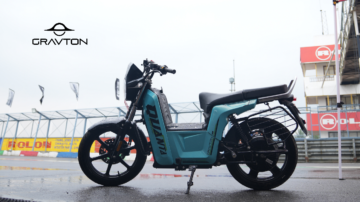
That means the best approach is to treat the three modes as tools you swap between, not settings you pick once and forget. The Gravton Quanta offers Eco, Power and Sport modes, and the same logic applies to most electric motorcycles.
| Riding situation | Smart mode approach | Why it helps range |
|---|---|---|
| Stop-start city traffic | Eco | Limits sudden surges and keeps you at efficient speeds |
| Mixed roads with gaps in traffic | Eco as default, Power for the gaps | You get a bit more headroom only when you need it |
| Highway or arterial stretches | Power or Sport, but hold a moderate cruise | You need the speed capability, but a steady cruise saves energy |
| Steep ramp, flyover or loaded ride | Step up for the climb, then step back down | You use extra power only for the few seconds it is needed |
| Low battery, long way home | Eco and a lower, steady speed | Maximises the kilometres left in the pack |
The rule of thumb is simple: start in Eco, step up for a reason, and step back down once the reason is gone. Riders who live permanently in the most powerful mode tend to ride faster and accelerate harder, and that, not the mode itself, is what costs electric bike range. Change modes in the way your owner’s manual recommends.
How Regenerative Braking Adds Electric Bike Range
When you slow a petrol motorcycle, the energy goes into heat at the brakes and is lost for good. When you slow an electric motorcycle with regenerative braking, the motor works as a generator and sends part of that energy back to the battery. It is not free electric bike range, but it is real range.
Regen will not turn a 100 km ride into a 150 km ride. In practice it adds a modest but useful amount, and it matters most in two places: stop-start city traffic and long descents. Here is how to get the most from it, if your electric motorcycle has regenerative braking:
- Lift off early. The longer and gentler the slowdown, the more energy can be recovered. A late, hard stop sends most of the energy into the friction brakes.
- Brake smoothly. Progressive braking lets regen do more of the work and saves your brake pads as well.
- Use descents. A long downhill is the best regen opportunity. Let the bike recover energy rather than coasting at speed and braking hard at the bottom.
- Do not expect it at low speed. Regen works less effectively at very low speeds, so the early part of the slowdown is where the gain is.
- Expect less on a full battery. A pack at or near 100 percent cannot accept much energy, so regen may be limited right after a full charge.
- Pair it with anticipation. Regen rewards riders who read the road. The more you plan your stops, the more energy you recover.
Check your owner’s manual for exactly how regeneration behaves on your model, since the way it is triggered and how strong it is can differ between vehicles.
Speed, Load, Tyres and Weather: The Hidden Range Levers
Speed. Aerodynamic drag grows with the square of speed. The table below shows the aerodynamic part of energy use per kilometre, compared with riding at 30 km/h.
| Speed | Relative aerodynamic energy per km |
|---|---|
| 30 km/h | 1.0x |
| 40 km/h | 1.8x |
| 50 km/h | 2.8x |
| 60 km/h | 4.0x |
| 70 km/h | 5.4x |
Illustration only: drag energy per km scales with the square of speed. Total energy use also includes rolling resistance and drivetrain losses, so the real-world effect is smaller at low speeds, but the trend holds. Dropping from 60 to 50 km/h cuts the aerodynamic part by roughly 30 percent.
Load. More weight means more energy to accelerate and to climb, which trims electric bike range. Take the bag of tools and the spare gear out of the box if you do not need them, and expect less range with a pillion.
Tyres. Under-inflated tyres have more rolling resistance and quietly steal electric bike range. Check pressure weekly, when the tyres are cold, and keep it at the pressure in your owner’s manual.
Weather. Heat accelerates battery ageing and cold reduces the capacity you can use. Park in the shade, avoid leaving the vehicle in direct afternoon sun, and expect a few fewer kilometres on cold mornings. A strong headwind can also cost you noticeably, so ease off the speed when riding into one.
Charging Habits That Protect Battery Health and Electric Bike Range
Range is not only about how you ride today. It is also about how much capacity your battery still has in two or three years. The charging habits below slow the loss of capacity, which means you keep more of your electric bike range for longer.
- Avoid running it flat. Regularly draining the battery close to zero stresses the cells. Recharge when you reach a low level rather than pushing for the last kilometre.
- Avoid sitting at extremes. Leaving a battery at 0 percent, or parked at 100 percent for days, is harder on it than staying in the middle.
- Partial charges are fine. Lithium batteries do not have a memory effect, so topping up when convenient is perfectly healthy.
- Mind the chemistry. LFP-family chemistries such as the LMFP pack in the Quanta tolerate full charges better than NMC packs, but sensible habits still help.
- Charge cool. After a hard ride in the heat, give the battery a little time to cool before plugging in, and charge in a shaded, ventilated place.
- Use the manufacturer’s charger. It is matched to the battery and its management system. Substitutes can cut battery life and affect your warranty.
- Plug in on a routine. A regular overnight charge is simpler and gentler than a mix of rushed top-ups. Gravton quotes approximately 5.4 hours for a full charge on the Quanta.
- Think in cycles. Gravton cites roughly 2,000 charge cycles for the LMFP battery. Fewer deep cycles and cooler temperatures help you get the most from every one of them.
Good charging habits are the quiet half of electric bike range, because a healthy battery keeps delivering the range you paid for. For a closer look at where and how to plug in, read our guide to electric two-wheeler charging in India.
Safe Charging Practices for Your Electric Bike Battery
Good habits protect your battery and your electric bike range. Safe habits protect your home. Treat the charger like any appliance that runs for hours.
- Use the supplied charger only, and keep it in good condition. Never use a damaged charger or cable.
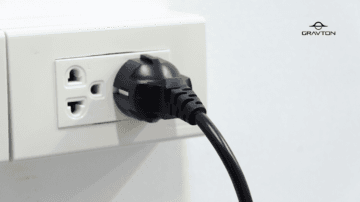
- Plug into a dedicated, properly earthed socket. Check the charger’s rating label and make sure the socket is rated for the load.
- Skip extension boards and multi-plugs. They add resistance and heat. Plug straight into the wall socket.
- Charge in a dry, ventilated place away from rain, wet floors, direct sun and anything flammable such as fuel, paper or fabric.
- Never charge a wet battery or connector. If the charging port is wet, dry it fully first.
- Have circuit protection. A working MCB or ELCB adds a layer of safety against faults.
- Check for warning signs. Inspect the cable and plug regularly for fraying, loose pins or warmth.
Stop charging and call service if you notice unusual heat from the battery or charger, a burning or chemical smell, hissing or swelling, or repeated error messages. Do not keep using a vehicle that shows these signs.
Battery Maintenance and Storage Checklist
Weekly
- Check tyre pressure when the tyres are cold
- Look over the charger cable and plug for damage
- Keep the charging port clean, dry and free of dust
Monthly
- Review your real-world electric bike range using the test above, and note any change
- Wash the vehicle gently, and avoid directing high-pressure water at the battery area, connectors or charging port
- Check that brakes and tyres are in good condition, since drag and friction both cost range
Before long-term storage (more than a few weeks)
- Leave the battery at a partial charge, not full and not empty
- Store the vehicle in a cool, dry, shaded place
- Top up the charge every few weeks
- Follow the manufacturer’s storage instructions for your model
Also keep up with scheduled services, since a well-maintained vehicle holds its electric bike range better. On the Quanta, the GOTAC app shows your upcoming service schedule, so you do not have to track it yourself.
Myths That Quietly Cost You Electric Bike Range
- Myth: “Sport mode always drains the battery faster.” Truth: a mode mainly sets the ceiling. Riding style and sustained speed are what drain the pack.
- Myth: “Charging overnight is dangerous.” Truth: with the right charger, a good socket and a battery management system, overnight charging is routine. Follow the safe practices above.
- Myth: “Always keep it between 20 and 80 percent.” Truth: partial charging is gentle, but LFP-family chemistries are more forgiving of full charges than NMC. Avoid extremes for long periods and follow your manufacturer’s guidance.
- Myth: “Regen will recharge my battery on the way.” Truth: regen recovers a modest share of the energy. It helps your electric bike range but does not replace charging.
- Myth: “Claimed range is what I will get.” Truth: claimed range is a test figure. Measure your own real-world electric bike range and plan with a buffer.
How the Gravton Quanta S+ Helps You Stretch Electric Bike Range
Technique gets the most electric bike range from any vehicle, and the Quanta S+ starts from a strong position. It has a claimed range of 165 KM, so even with a planning buffer you have a generous margin for daily riding.
- Eco, Power and Sport modes let you swap between efficiency and headroom as the road changes.
- 172 Nm of instant torque from the BLDC hub motor means you rarely need to wring the throttle to hold speed on a slope.
- LMFP battery chemistry is known for strong thermal stability, backed by a 3 year or 30,000 KM warranty.
- A portable charger works from any standard 3 pin socket, so topping up at home, at the office or at a friend’s place is simple.
- The GOTAC app shows battery status, sends charging notifications and reminds you of upcoming services, so you can see what is happening without guessing.
Add the habits in this guide and the claimed number becomes a real-world electric bike range you can rely on.
A One-Week Plan to Boost Your Electric Bike Range
- Day 1: Measure. Run the range test and write down your baseline.
- Day 2: Reset. Set tyre pressure, clear unnecessary weight from the box and check the charging port.
- Day 3: Smooth throttle. Ride the egg-under-your-palm way and watch how your consumption changes.
- Day 4: Mode discipline. Start every ride in Eco and step up only when you have a reason.
- Day 5: Regen focus. Practise lifting early and braking softly, especially on descents.
- Day 6: Charging routine. Plug in on a regular schedule, in the shade, on a safe socket.
- Day 7: Re-measure. Repeat the range test and compare your electric bike range with Day 1 to see the difference you have made.
Get the Most Out of Every Charge
Book a test ride on the Quanta and experience the modes, the instant torque and the GOTAC app for yourself.
Book a Test Ride Call 7995252220Frequently Asked Questions
What is the difference between IDC range and real-world range?
IDC (Indian Driving Cycle) range is measured on a standard test cycle under controlled conditions with no wind, no gradient and a new battery, which makes it useful for comparing vehicles. Real-world range is what you actually get on your roads, with your load, speed, traffic and weather, and it is commonly 15 to 30 percent lower than the claimed figure.
How can I increase my electric bike range?
Ride at steady moderate speeds, accelerate smoothly, use Eco mode as your default, brake gently and early so regenerative braking can recover energy, keep tyres at the recommended pressure, avoid carrying unnecessary weight, and keep the battery healthy with sensible charging and cool storage.
Does Sport mode reduce electric bike range?
A ride mode mainly sets the ceiling for power and speed. What drains the battery is how hard and how fast you actually ride. Riding at sustained high speeds in any mode reduces range, because aerodynamic drag rises with the square of speed. Using Sport only when you need the extra headroom keeps the cost low.
Does regenerative braking really increase range?
Yes, modestly. Regenerative braking recovers part of the energy normally lost as heat when you slow down, and it helps most in stop-start city traffic and on descents. It cannot replace charging, and it works less effectively at very low speeds or when the battery is already full.
Is it bad to charge an electric bike to 100 percent every day?
Partial charging is gentler on any lithium battery, but LFP-family chemistries such as LMFP tolerate full charges better than NMC packs. Avoid leaving the battery at 100 percent or at 0 percent for long periods, avoid charging in heat, and follow the manufacturer’s guidance for your model.
How should I store an electric bike battery for a long time?
Store the vehicle in a cool, dry place with the battery at a partial charge rather than full or empty, and top it up every few weeks. Avoid heat, direct sun and damp, and follow the manufacturer’s storage instructions.
How long does an electric bike battery last?
Battery life depends on chemistry, temperature, charging habits and usage. Gravton cites roughly 2,000 charge cycles for the LMFP battery in the Quanta, and the battery is backed by a 3 year or 30,000 KM warranty. Gentle riding, moderate temperatures and sensible charging help the battery last longer.
Is it safe to charge an electric bike overnight?
It is generally safe when done correctly: use the manufacturer’s charger, a dedicated and properly earthed socket, no extension boards, a dry and ventilated place, and keep flammable items away. Stop charging and contact service if you notice unusual heat, smell or error messages.
About this guide. Published by Gravton Motors, Hyderabad, an electric two-wheeler manufacturer, so Gravton details are manufacturer-provided. This is general guidance. Electric bike range varies with conditions, and charging and storage advice differs between models, so always follow your owner’s manual and the manufacturer’s recommendations.
Website: www.gravton.com | Email: connect@gravtonmotors.com | Phone: 7995252220